Cooling infill is real. It works by holding water down in the lawn and letting it dry off slowly, which pulls heat out of the blades the way sweat cools your skin. The part the sales sheets bury is simple: it only cools while it is wet.
In a Phoenix June, the air is very dry and rain is rare. Wet is something you have to do to the lawn. It is not something the product does on its own.
What the sellers claim
First, some context. Most turf lawns get infill, brushed down between the blades. Its main job is to hold the blades upright and keep the turf weighed down and flat.
Plain sand does that job and nothing more. Cooling and odor products are sold as a step up from plain sand, and they cost more. That is where the claims come in.
The common names you will see are HydroChill, T°Cool and zeolite blends. Some of them market a surface that runs 30 to 50 degrees cooler than turf without it.
Read closely and the claims are hard to compare. Each brand tests in its own way, and few say how long the cooling lasts.
There is also a quiet comparison inside every claim. Cooler than plain turf is not the same as cool. If plain turf in full sun is 160°F, a lawn 30 degrees cooler is still 130°F, which is above the 120°F mark BYU's safety office set as its limit for play.
The condition that matters
These water-based infills need water to work. When the lawn is freshly wet, the infill gives off heat as the water leaves. When the water is gone, it sits in the sun like any other grain of sand.
Tests on plain turf show how fast that can happen. At Brigham Young University, a watered field went from 85°F back to 120°F in five minutes. Cooling infill holds water longer than bare blades do, but on a dry Phoenix afternoon the clock still runs.
What cooling infill is good for
It still has a place. Used for the right job, it is worth having in some yards.
Pet odor is the real win for zeolite
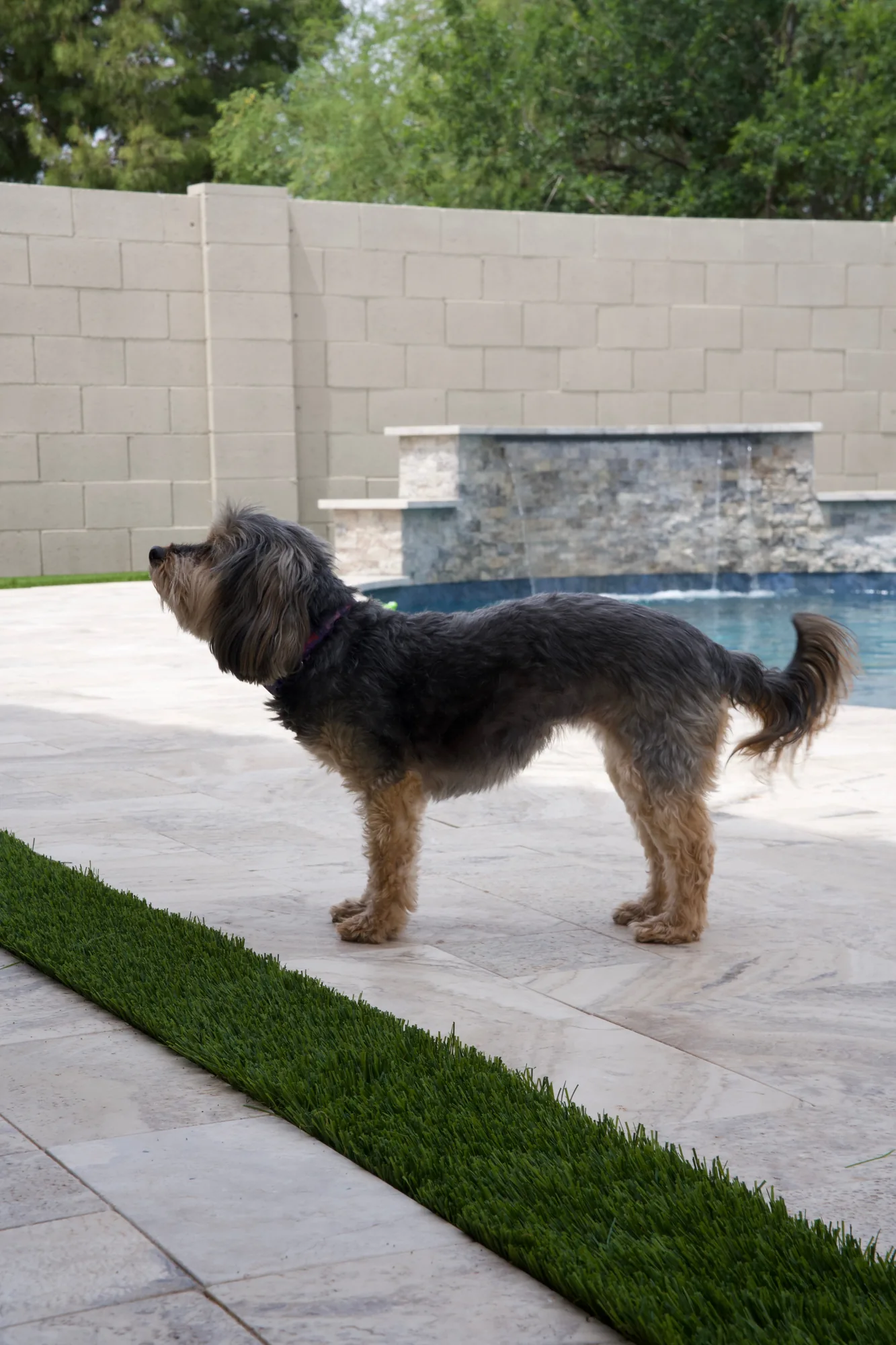
Zeolite is a mineral that traps ammonia, the smell in dog urine. That benefit is not in dispute, and it matters more in Arizona heat, where odor builds faster. If you have dogs, zeolite infill is worth asking about for the smell alone.
That is the honest way to buy it: for odor, with any cooling as a bonus while it is damp. Our pet turf page covers how we build a dog yard so it drains and rinses clean.
Some help in the right hours
If you rinse a shaded patch in the late afternoon before the kids go out, a water holding infill can stretch that window a little. That is a real gain, used the right way. It just isn't a cool lawn at 2pm in July.
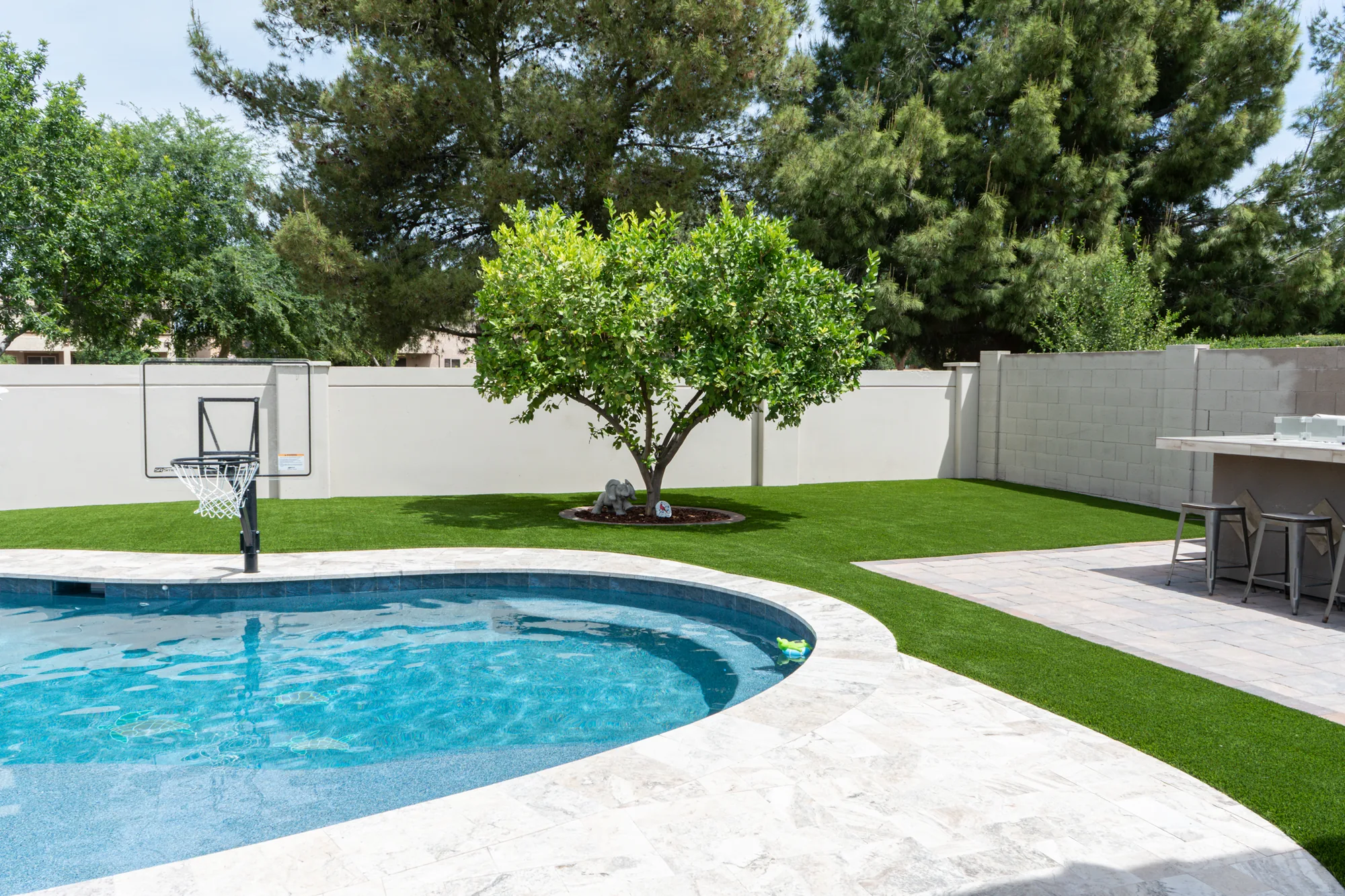
Turf beside a pool is another fair case. Splash from swimmers keeps the edge damp more often, so a water holding infill there gets more chances to do its job. Our pool and patio turf page covers how we lay turf near the water.
Questions to ask before you pay extra
If an installer quotes you a cooling infill, ask these before you sign. A straight answer to each one tells you whether you are buying a product or a slogan.
- What is the product called? Ask for the product name and its spec sheet, then read the cooling claim on it.
- Is it in the base price or an upcharge? Get the number in writing.
- How long does it cool after it gets wet? Ask how that was measured, and in what weather.
- What is it cooler than? Plain turf, concrete, or the air? Only the first is an honest comparison.
- Does it need water to work? The honest answer is yes.
What we put first
We would rather you spend money on shade than on a cooling claim. In the BYU work, shaded turf stayed far cooler than turf in full sun, and shade works whether the lawn is wet or dry. Read shade is the one thing that really cools turf for how we plan around it.
All the turf heat numbers sit in one place in how hot artificial turf gets in a Phoenix summer. Read that one first if you are new to this.
When you are ready, see how we build a residential turf lawn. Then ask us what infill is on your quote and why. You should get a plain answer, with the product name and the price on paper.