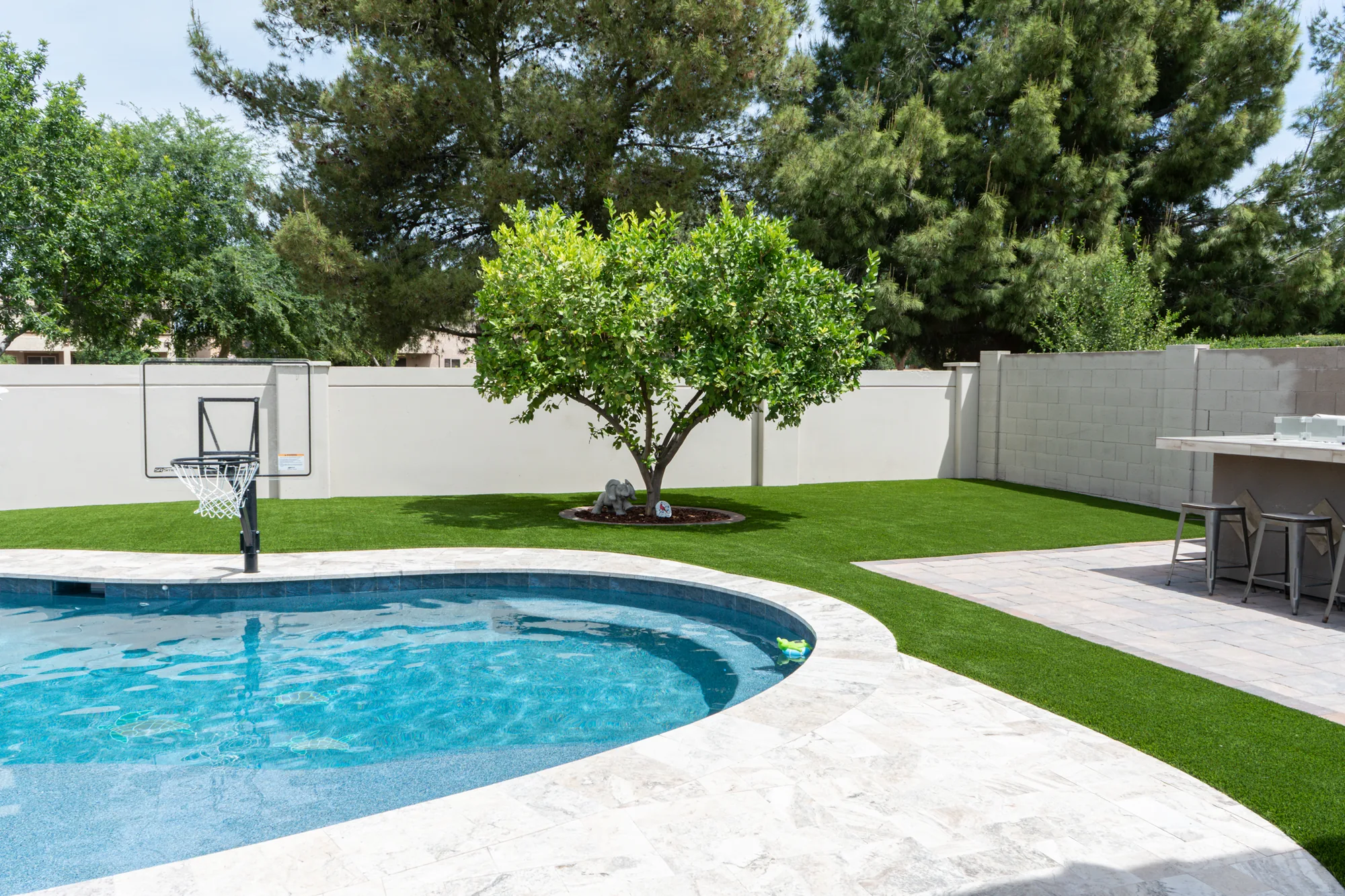
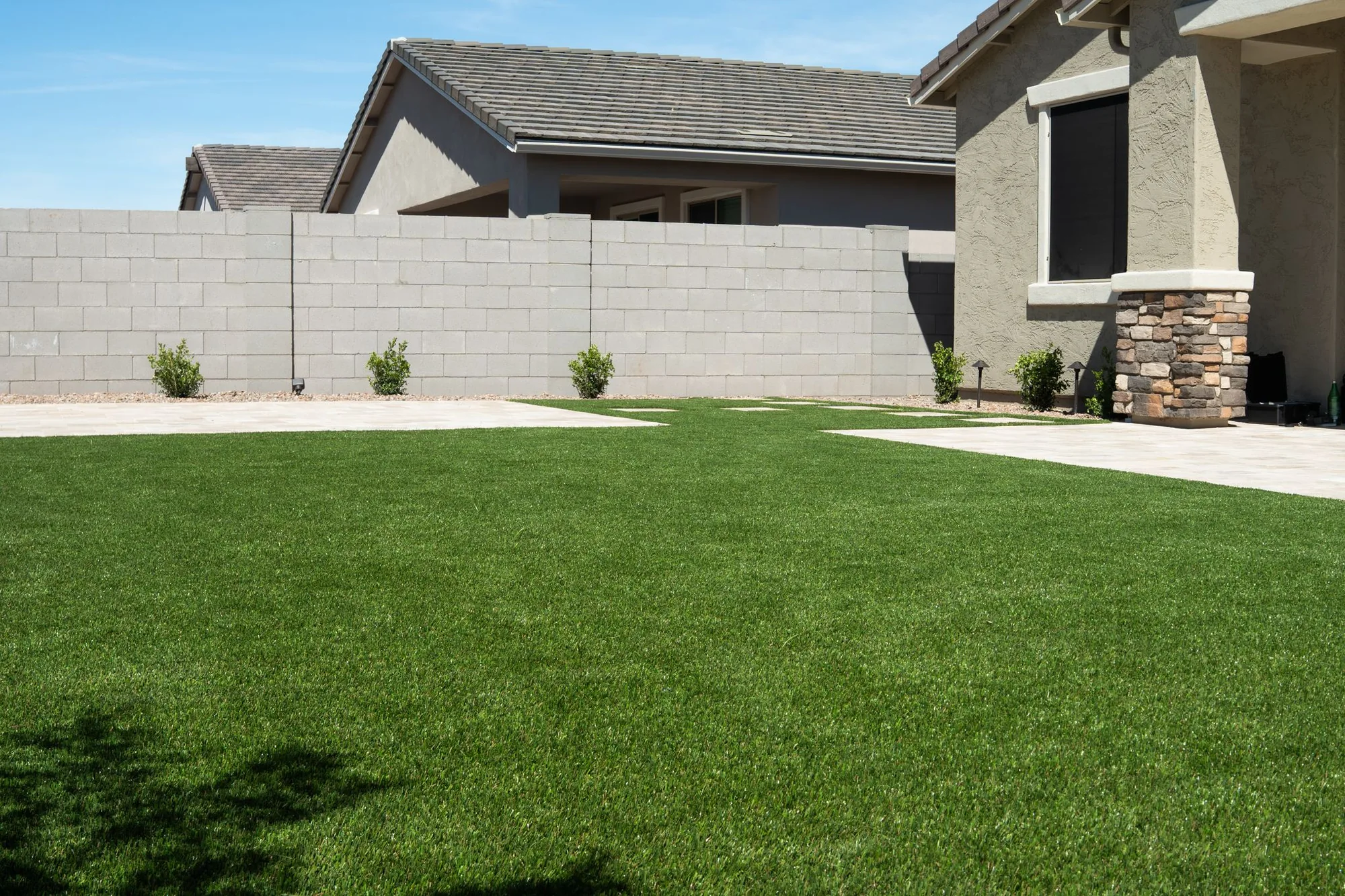
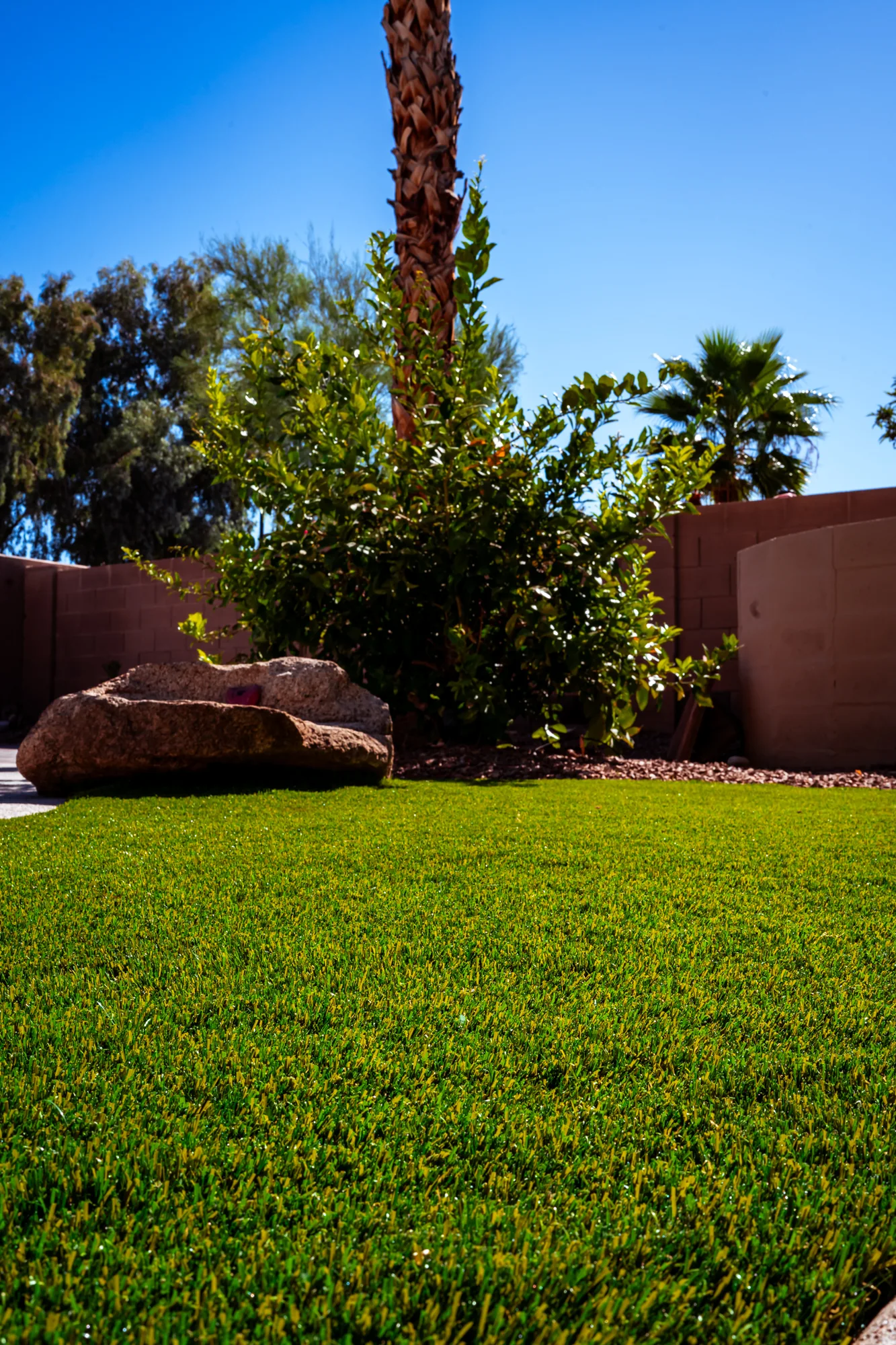
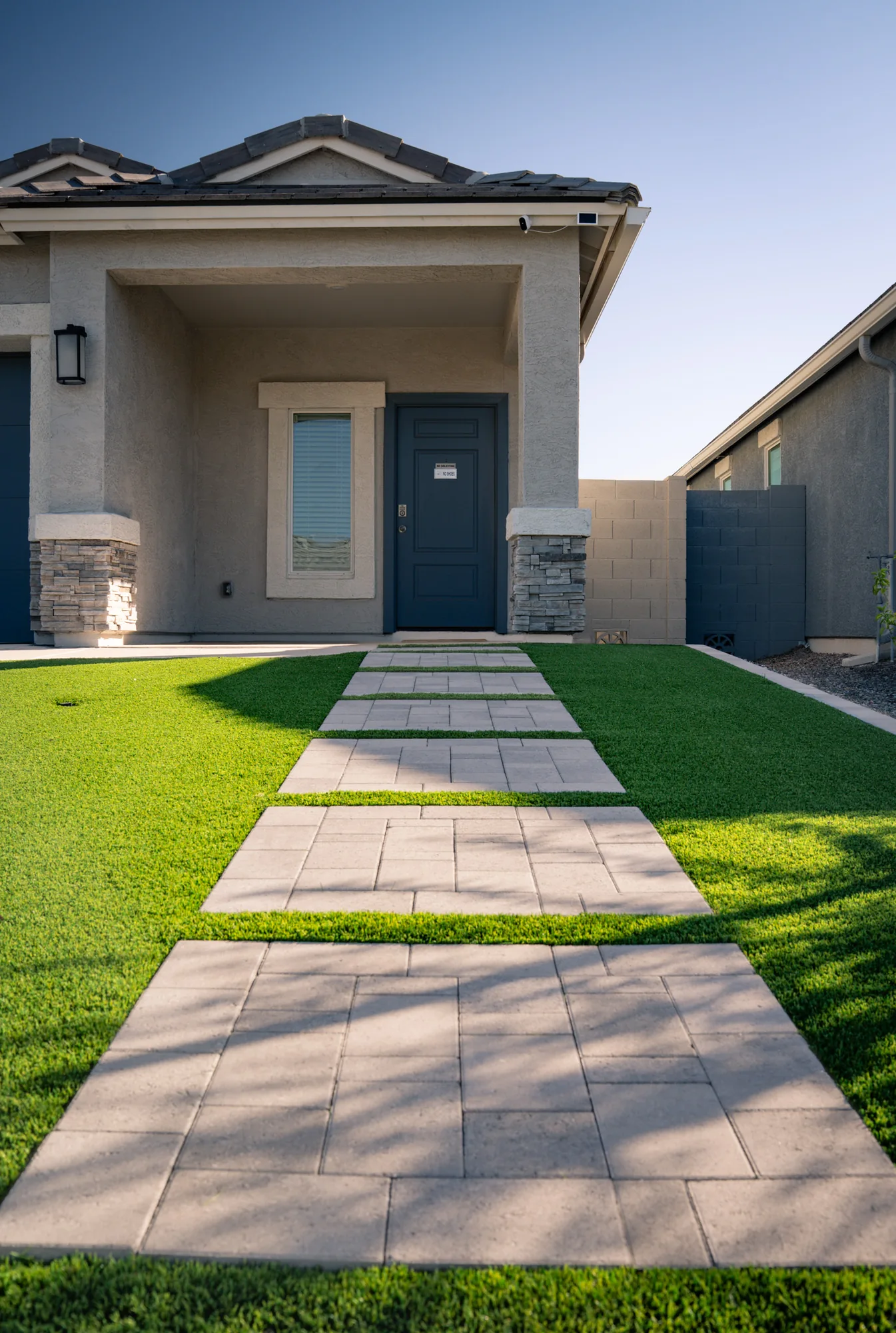
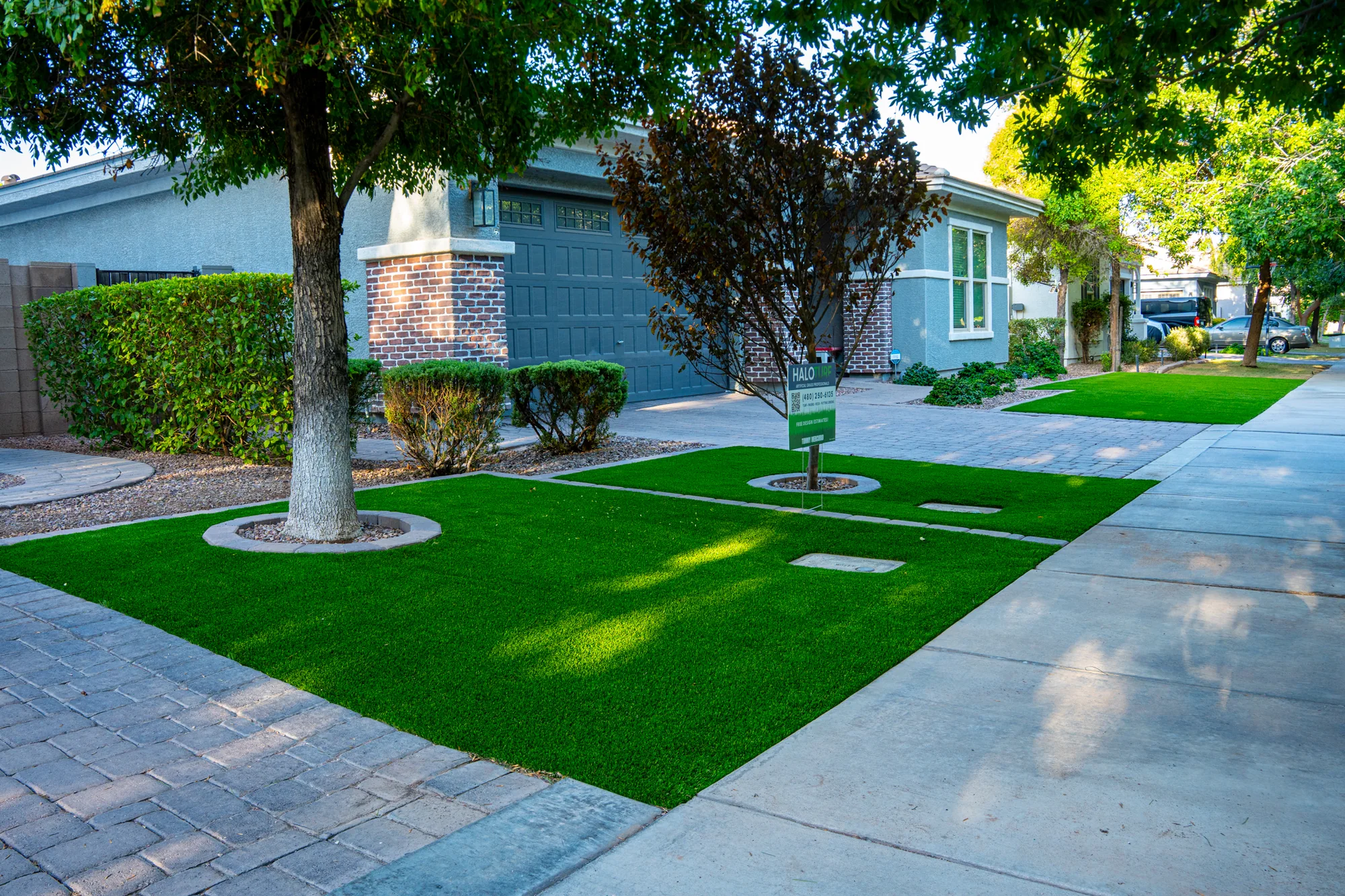
Brigham Young University measured shaded synthetic turf at about 76°F on average over the middle of the day, with a high near 99°F. Turf in full sun peaked at 157°F. Nothing you can buy comes close to that.
So when someone in Mesa or Chandler asks how to keep turf cool, our first answer is a question. Where does your shade fall at four in the afternoon?
Why shade beats every product
Turf heats up because the sun lands on it. Infill, fiber color and rinsing all try to deal with that heat after it arrives. Shade stops most of it from arriving at all.
Compare the other options against that. Lab tests at Penn State found no fiber color or infill mix that ran much cooler than standard green turf. A rinse drops the surface fast, but tests show it climbing back to 120°F within five minutes.
Cooling infill only cools while it is wet. In a dry July, that does not last long.
We cover the numbers on each of those in how hot artificial turf gets in a Phoenix summer. Shade is the one lever that keeps working all afternoon.
Where shade comes from in a Valley yard
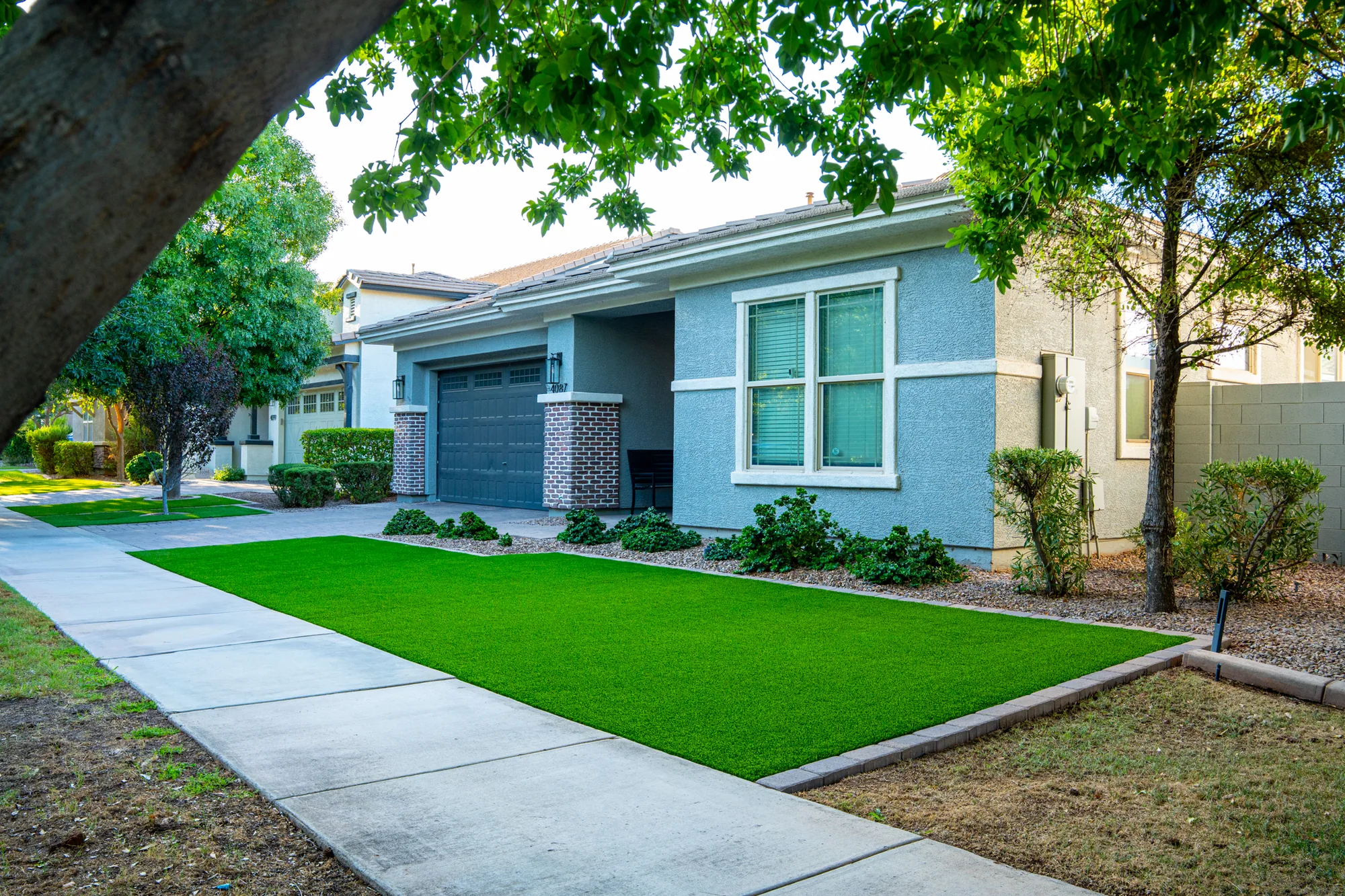
- The house itself. The sun moves west through the afternoon, so the house throws its shadow to the east. In many Valley lots that puts part of the back yard in shade after 3pm or 4pm.
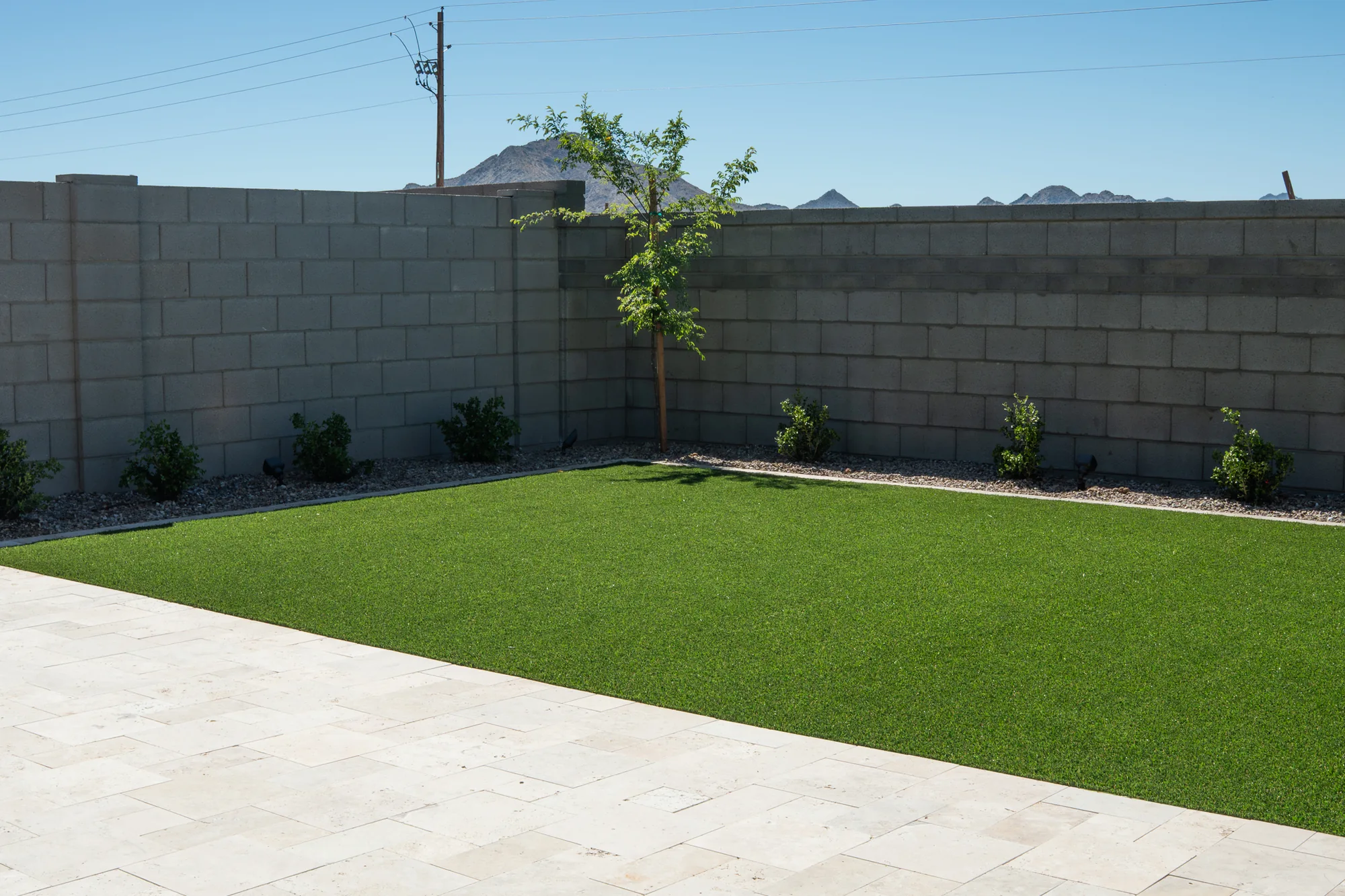
- Block walls. A six foot wall shades a narrow strip along its base. That strip is often the best spot for a dog run.
- Trees. A mature tree shades a wide circle, but it needs water. Pick the one or two trees that earn it, and plan the lawn under them.
- Patio covers, ramadas and pergolas. A solid cover gives full shade at its feet. A slatted pergola gives broken shade, which still helps.
- Shade sails. They go up fast and can be angled to block the hottest hours.
Which way your yard faces
A back yard on the east side of the house picks up the house's shadow for much of the afternoon. That is the easiest yard in the Valley to turf. You often need nothing more than a smart layout.
A yard on the south or west side gets the full afternoon sun. It can still take turf, but it needs more help from a cover or a tree, and more of it should be stone. We will tell you which kind of yard you have on the first visit.
Put the lawn where the shadow falls
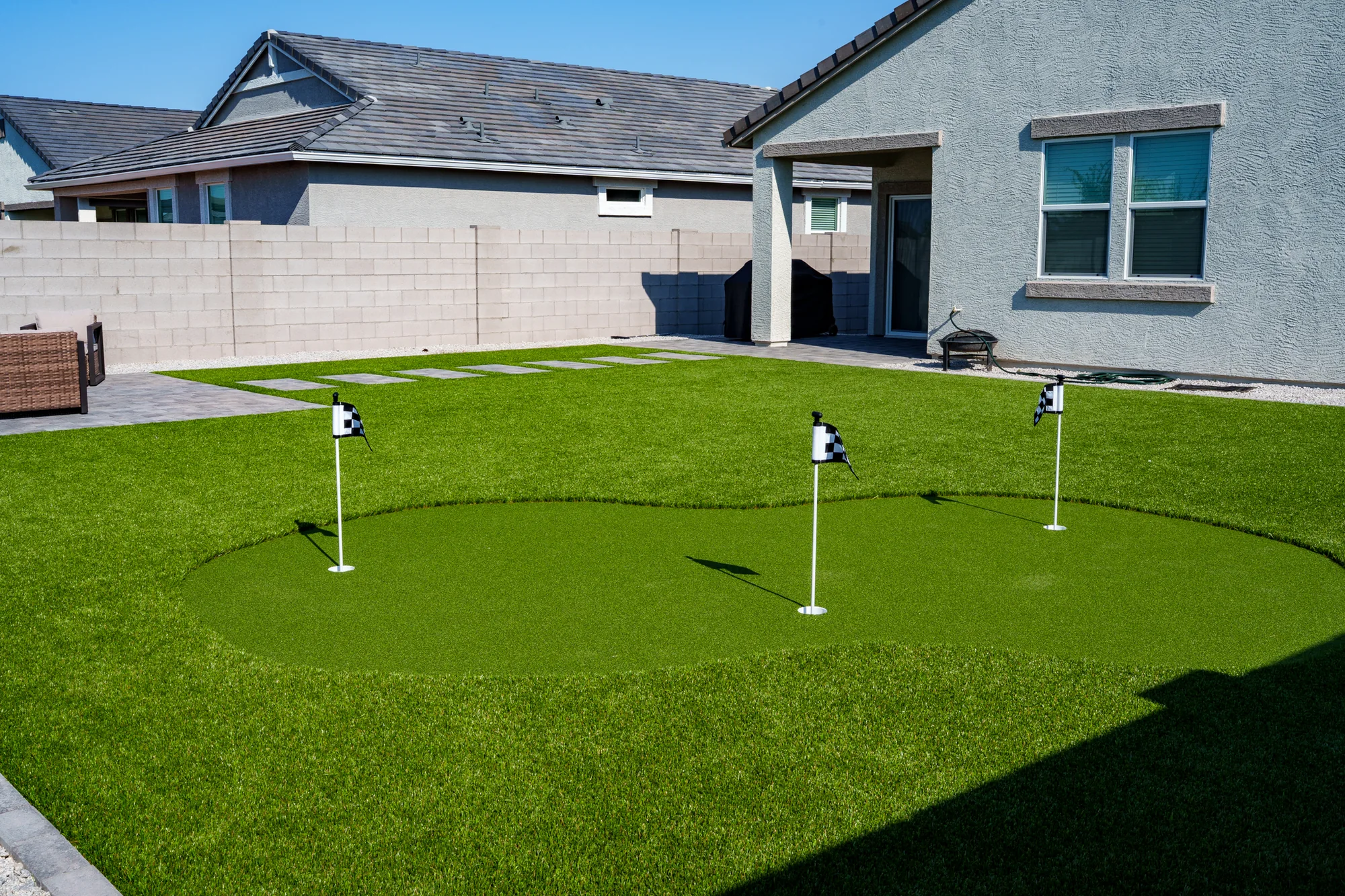
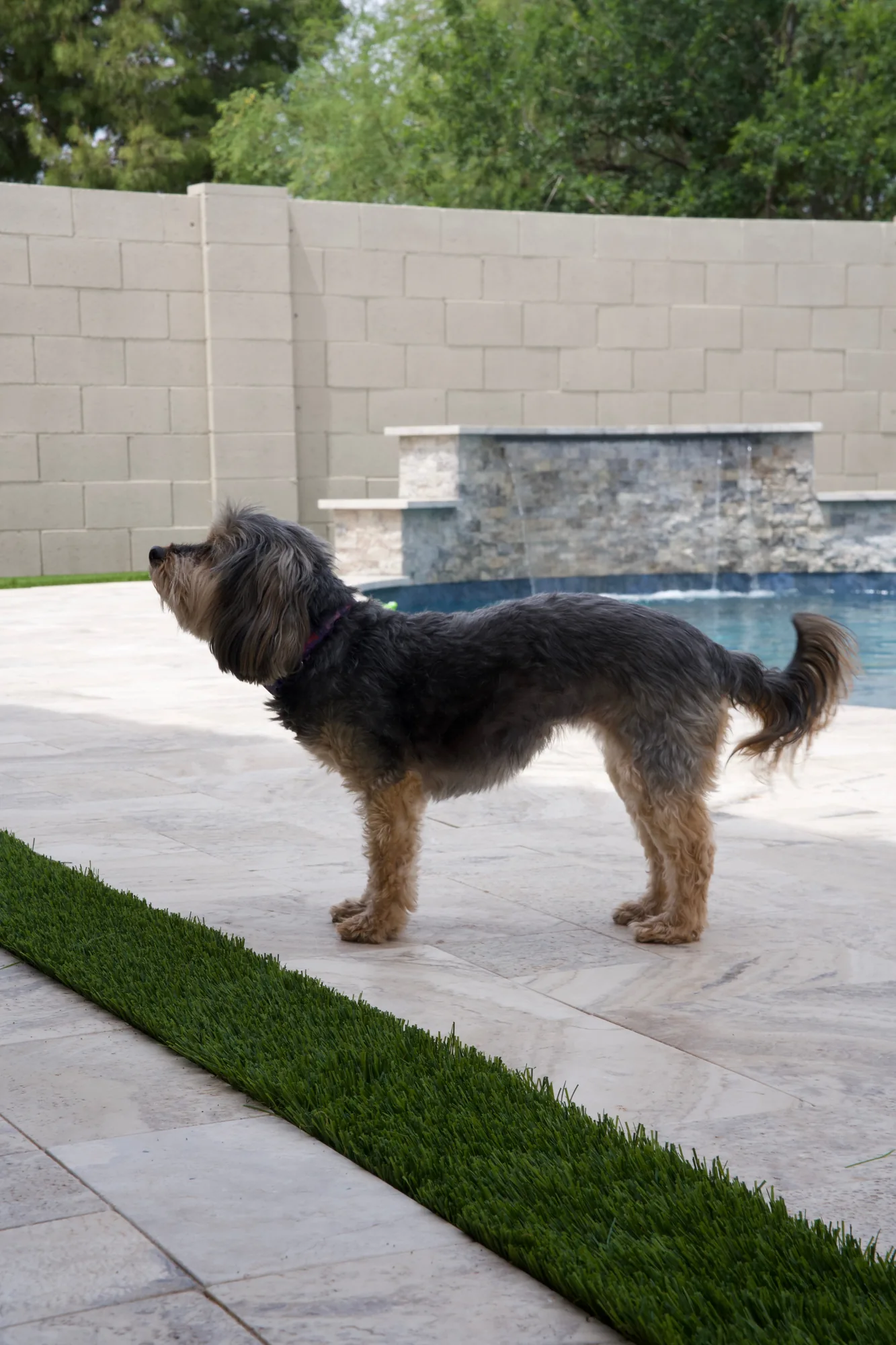
Once you know where the afternoon shade lands, the layout mostly follows. The lawn goes in the shade, the open sun goes to stone, and the dog gets a shaded patch near the door. We walk through that plan step by step in designing a back yard you can use in July, and our pet turf page covers the dog side.
How to map the shade in your own yard
You don't need a tool for this. You need a phone and one sunny Saturday in summer.
- Take three photos from the same spot. Stand at the back door and shoot the yard at 10am, 1pm and 4pm. Those three frames show where the shade sits in the morning, at midday and in the late afternoon.
- Mark the hours you use the yard. If the kids play after school and the dog goes out at dinner, the 4pm photo matters most. The noon photo matters less.
- Note what blocks the sun. Write down which shade comes from the house, a wall, a tree or a cover. A tree can grow or be lost. A wall stays put.
Bring those photos to your quote. They show us in a minute what would take an hour of guessing, and they make the layout talk much shorter.
Summer shade is not winter shade
The sun sits high in June and low in December. A wall that throws a thin strip of shade in summer can shade half the yard in winter. So a photo taken in March or October will make the summer shade look bigger than it is. If you can, take your photos between June and August, when the heat is the problem you are solving.
What shade can't do on its own
Shade moves. A cover that shades the lawn at 4pm may leave it in full sun at noon, when the sun is almost overhead in June. Plan for the hours you will really use the yard, and accept that some parts of it are for evenings.
Shade from a tree also costs water. One tree on drip is a fair trade for a cooler lawn. Plan for its water bill too.
Lighter fiber colors and a rinse are still worth having on top of shade. They are small helps, not the plan.
We install residential turf across Mesa and the Phoenix Valley. Ask us for a free quote and we will tell you where the shade in your yard falls.