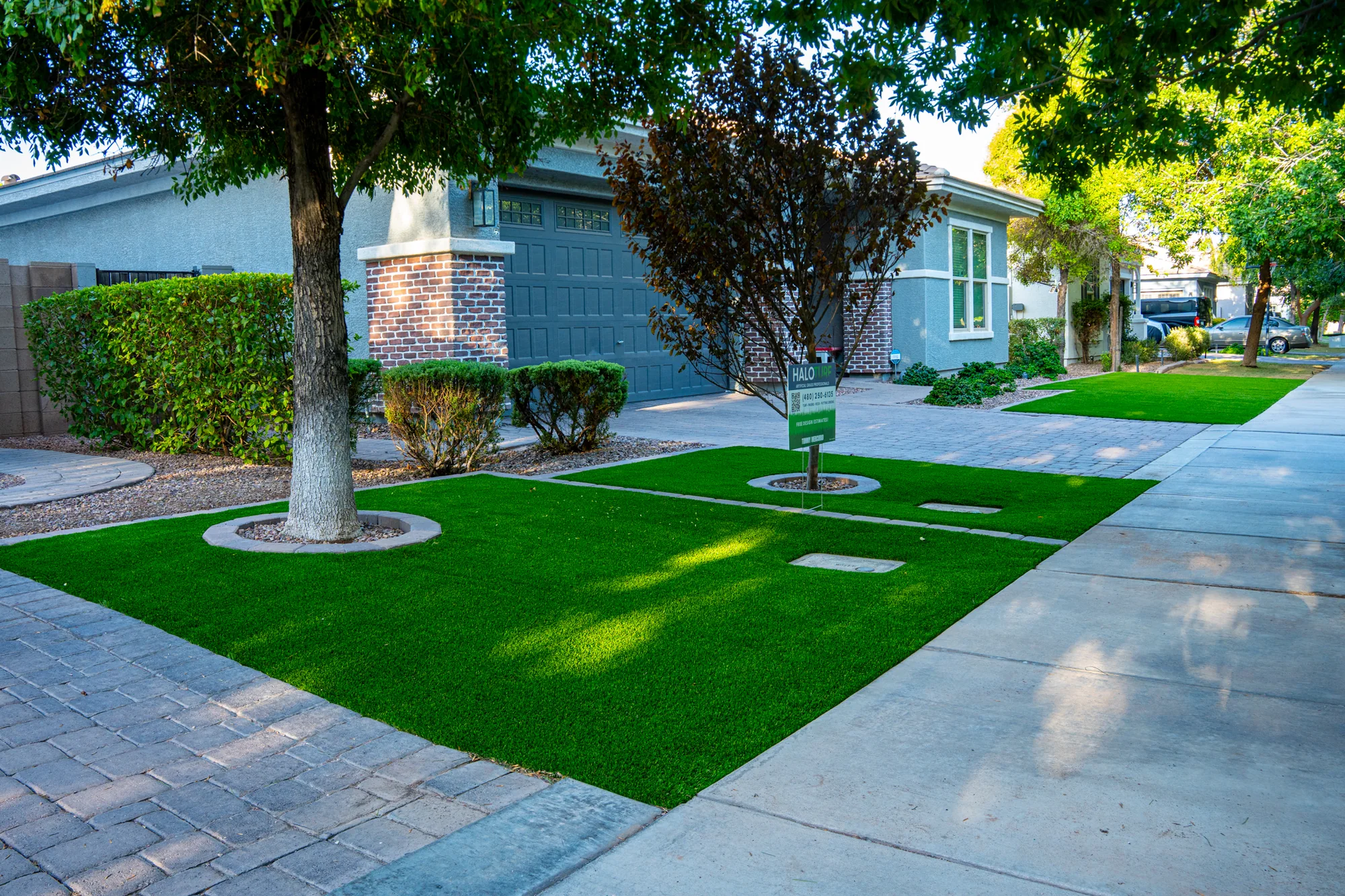
On a summer afternoon in Phoenix, artificial turf in full sun can top 150 degrees. That is hotter than the concrete patio next to it. We would rather you hear that from us now than find out on the first hot day in June.
Most turf pages skip this part or say turf stays cool. It doesn't. Here are the real numbers, why they happen, and what actually brings them down.
What the tests measured
The best side by side numbers come from Brigham Young University. Researchers logged five surfaces from 7am to 7pm on the same days. Here are the daytime averages they found.
- Synthetic turf: 117°F on average, with a peak of 157°F.
- Asphalt: 110°F on average.
- Bare soil: 98°F on average.
- Concrete: 94°F on average.
- Natural grass: 78°F on average, with a peak of 89°F.
The hottest turf reading in that work was 200°F. The air that day was only 98°F. Air temperature is a poor guide, because the sun hitting the surface is what drives the number.
A team from Arizona State ran its own test here in Phoenix on a 114 degree day. Turf was hotter than asphalt and brick all day, until about 5pm. In the words of Middel, one of the researchers: "Artificial turf can actually get as hot or even hotter than asphalt and concrete."
Put those together and you get the honest Phoenix answer. On a 110 to 115 degree afternoon in full sun, expect a turf surface well over 150°F. Tests have recorded peaks near 160°F, and one reading of 200°F.
Why plastic grass runs hotter than a slab
Turf reflects less than 10 percent of the sunlight that hits it. A live lawn also pulls water up through the blade, which cools the leaf. Turf has no water to give up, so the top of the lawn just keeps soaking in sun.
That matters for people and pets. Skin can burn in under 10 minutes at 122°F, and paws can burn too.
BYU's own safety office capped play on its fields at a 120°F surface. A Phoenix lawn in full July sun runs well past that.
What brings the number down, and by how much
There are five common answers to turf heat. Only one of them is big. Here they are in order of the evidence behind them.
1. Shade does the heavy lifting
In tests at Brigham Young University, shaded turf averaged about 76°F over the middle of the day. It topped out near 99°F. Turf in full sun peaked at 157°F. No other fix here comes close to that, and it costs nothing to plan for.
We cover it in detail in shade is the one thing that really cools turf.
2. A rinse buys you minutes
Water cools hot turf fast. When BYU watered its field, a 174°F surface dropped to 85°F, then climbed back to 120°F in five minutes and 164°F in 20. See rinsing turf cools it for minutes, not hours for when that is still worth doing.
3. Cooling infill only cools while it is wet
Cooling infills hold water in the lawn and give off heat as it dries. Sellers quote 30 to 50 degrees cooler than plain turf, but the effect ends when the water is gone, and on a dry Phoenix afternoon that does not take long. Read cooling infill works only while it is wet before you pay extra for it.
4. Lighter fibers help a little
Lab tests at Penn State found no fiber color or infill mix that ran much cooler than standard green turf. A lighter color won't change how the lawn feels at 2pm.
5. Pads don't cool anything
A foam pad under turf is great for comfort, drainage and a softer fall under a swing set. We never sell a pad as a way to cool the surface.
If you want to see turf next to concrete and a live lawn in one place, read turf, concrete and real grass on a 115 degree day. If kids or dogs will be out there, read walking barefoot on turf in a Phoenix summer too.
How we plan an Arizona yard around the heat
We start every quote by looking at the sun, not the tape measure. Where does the house throw a shadow at 4pm, which tree is worth its water, and where will the kids, the dog and the chairs be in July?
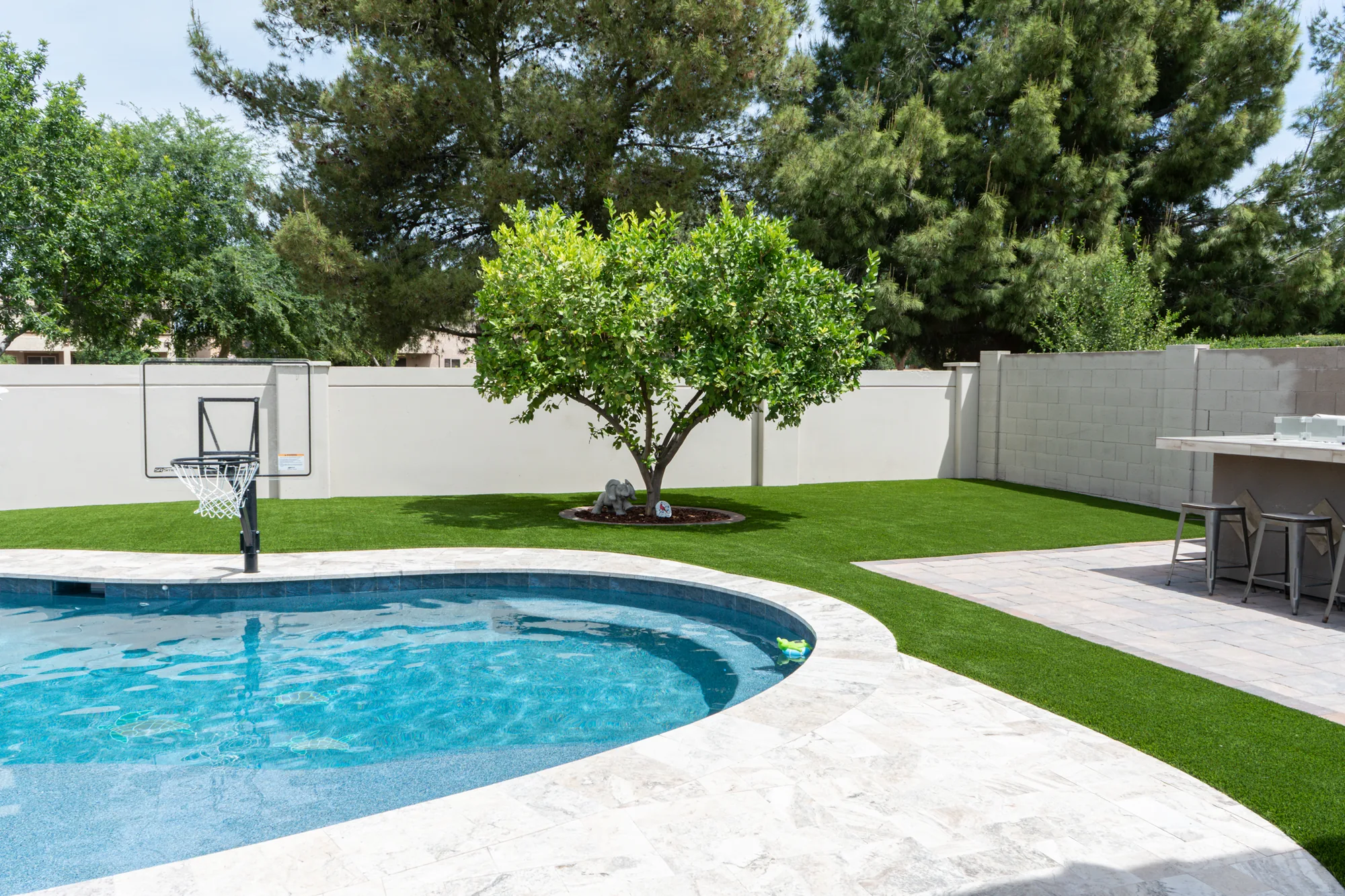
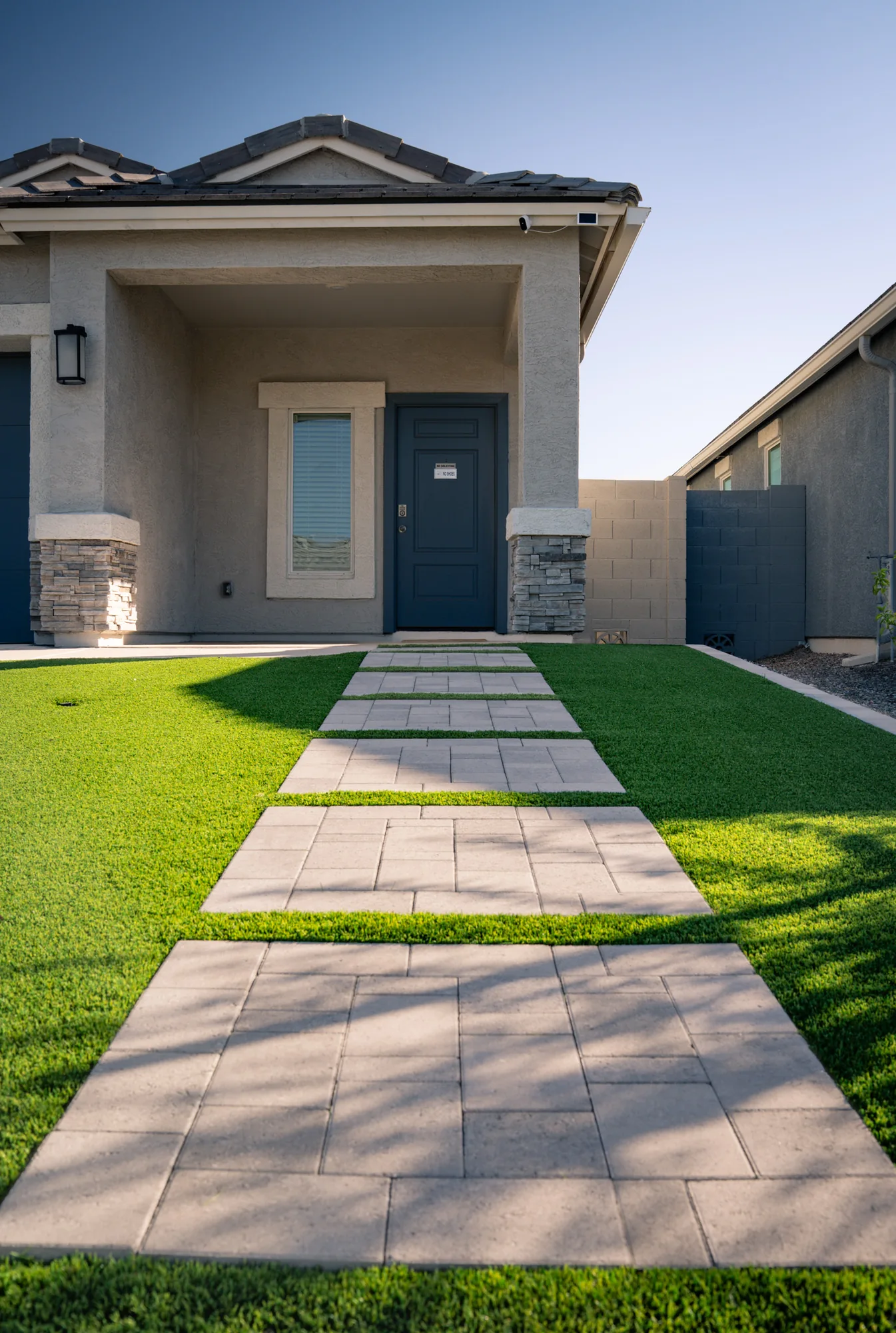
Then we lay the yard out around the answers. Turf goes where the shade falls and where people use it in the evening. Stone, pavers or gravel take the open sun, and the path from the back door to the pool stays on hardscape.
We walk through that layout in designing a back yard you can use in July. None of this means turf is the wrong choice. It means it should be planned for an Arizona summer, so you get a green yard with no lawn to water and you know which parts of it to use at noon.
Our yard is on South Power Road in Mesa, and we install across the Phoenix Valley. See how we build a residential turf lawn, or send us a few photos of your yard and we will tell you where the shade is before we talk about square feet. You can also head back to the HaloTurf home page.