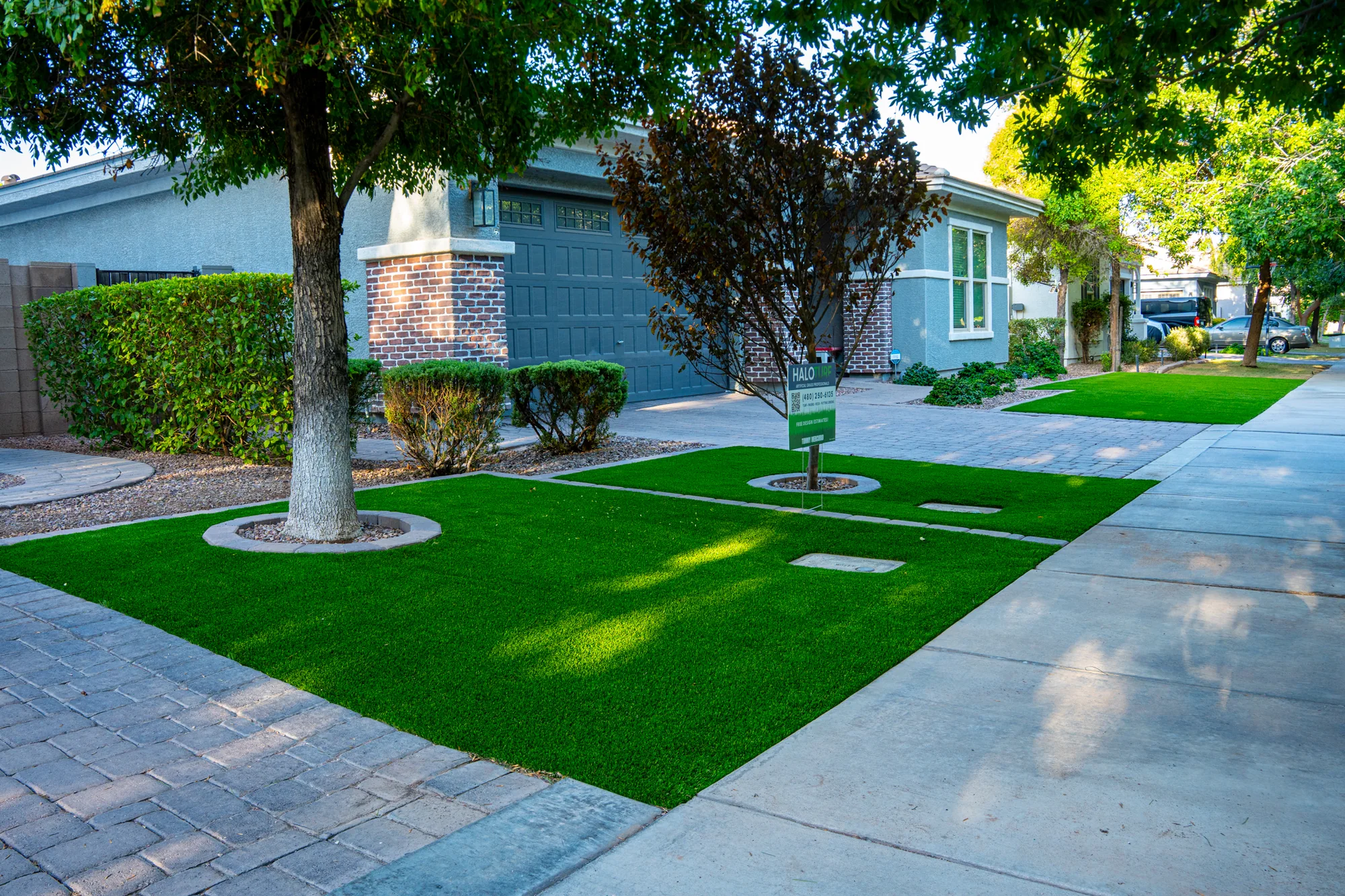
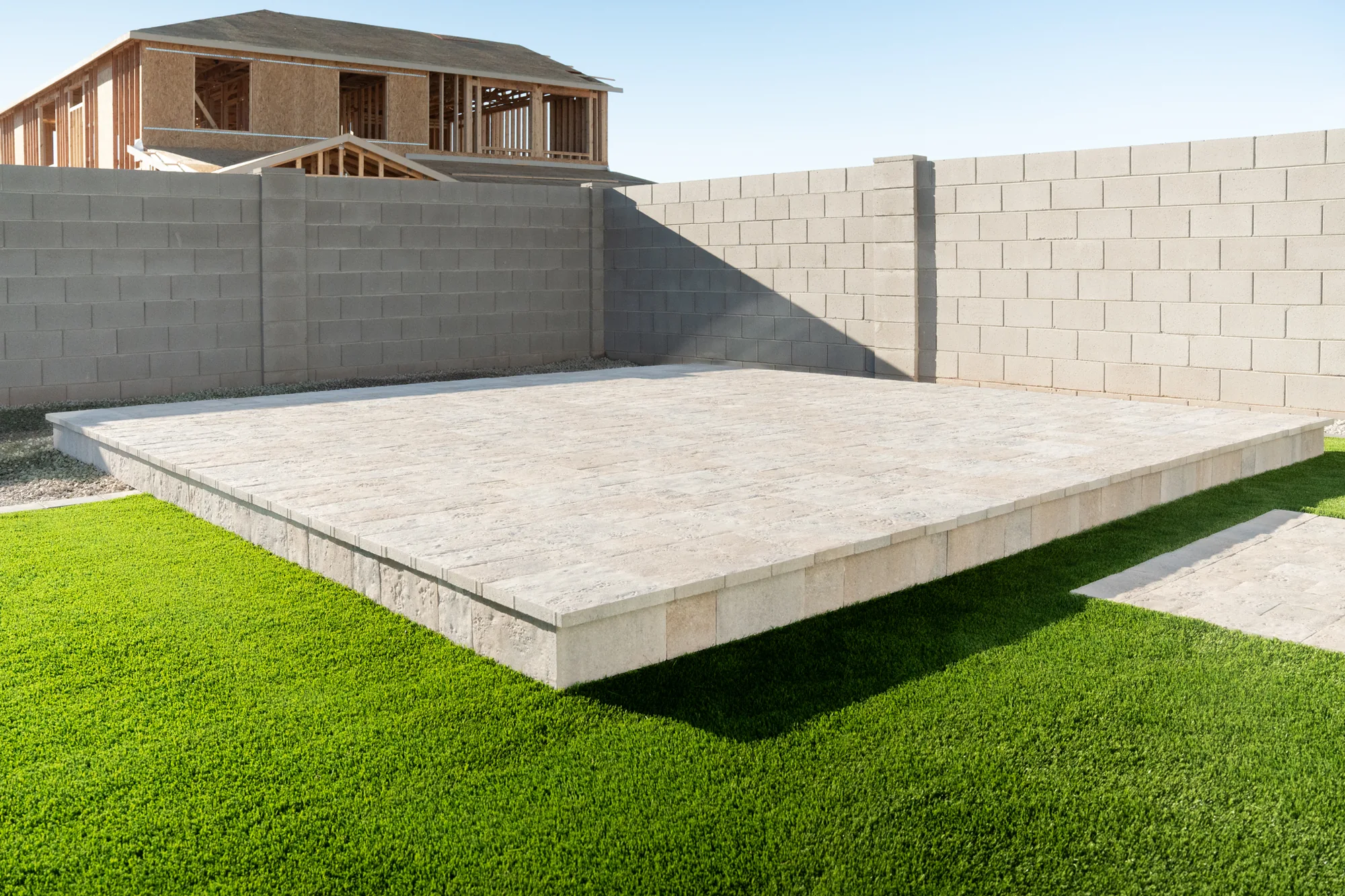
A lot of turf ads say artificial grass stays cooler than a concrete patio. The tests say the reverse. In full sun, turf is the hottest surface in a typical Valley back yard, hotter than the concrete, the pavers and even the asphalt out front.
Here is how the common surfaces compare, where each one fits, and why a live lawn still wins on heat.
The side by side numbers
Brigham Young University logged five surfaces from 7am to 7pm on the same sunny days. These are the averages across those hours, with peaks where they were reported.
- Synthetic turf: 117°F average, 157°F peak.
- Asphalt: 110°F average.
- Bare soil: 98°F average.
- Concrete: 94°F average.
- Natural grass: 78°F average, 89°F peak.
Turf beat concrete by more than 20 degrees on average. It even ran hotter than asphalt, which most people think of as the hottest thing outside.
Arizona State found the same pattern in Phoenix. On a 114 degree day, turf stayed hotter than asphalt and brick all day, until about 5pm. Middel, one of the researchers, put it this way: "Artificial turf can actually get as hot or even hotter than asphalt and concrete."
Why the order comes out this way
Concrete is pale and heavy. It reflects more sun and pulls heat down into the slab. Turf blades are thin, dark green plastic that reflect less than 10 percent of the sun, so the heat stays right at the top where your feet are.
A live lawn pulls water up through each blade and lets it dry off the leaf. That is why grass stays so much cooler than everything around it.
What each surface is good for
No surface wins on every count. Here is how we think about each one in a Phoenix yard.
A live lawn
It is the coolest surface in the yard, and that is a real point in its favor. The cost is water. More than half of a typical Phoenix home's water goes outdoors.
A lawn also needs heavy summer watering, mowing and fertilizer, and turns to mud under a dog. Some homeowners still keep a small patch for the cool spot. That is a fair call, and we will tell you so.
Concrete, pavers and stone
These run hot in the sun too, just less hot than turf. They are the right surface for paths, the pool deck and any part of the yard that sits in full sun all afternoon.
None of them is cool at noon in July. They are just less hot than turf, and they don't need to be soft.
Bare dirt and gravel
Bare soil averaged 98°F in the BYU tests, cooler than turf. That doesn't make it a good yard. It turns to dust in June and to mud in a monsoon storm, and dogs track both into the house.
Plenty of new builds in the Valley hand over the back yard as bare dirt. If that is your yard, the choice is not turf or a cool lawn. It is turf, stone or a lawn you will have to plant and water from scratch.
Artificial turf
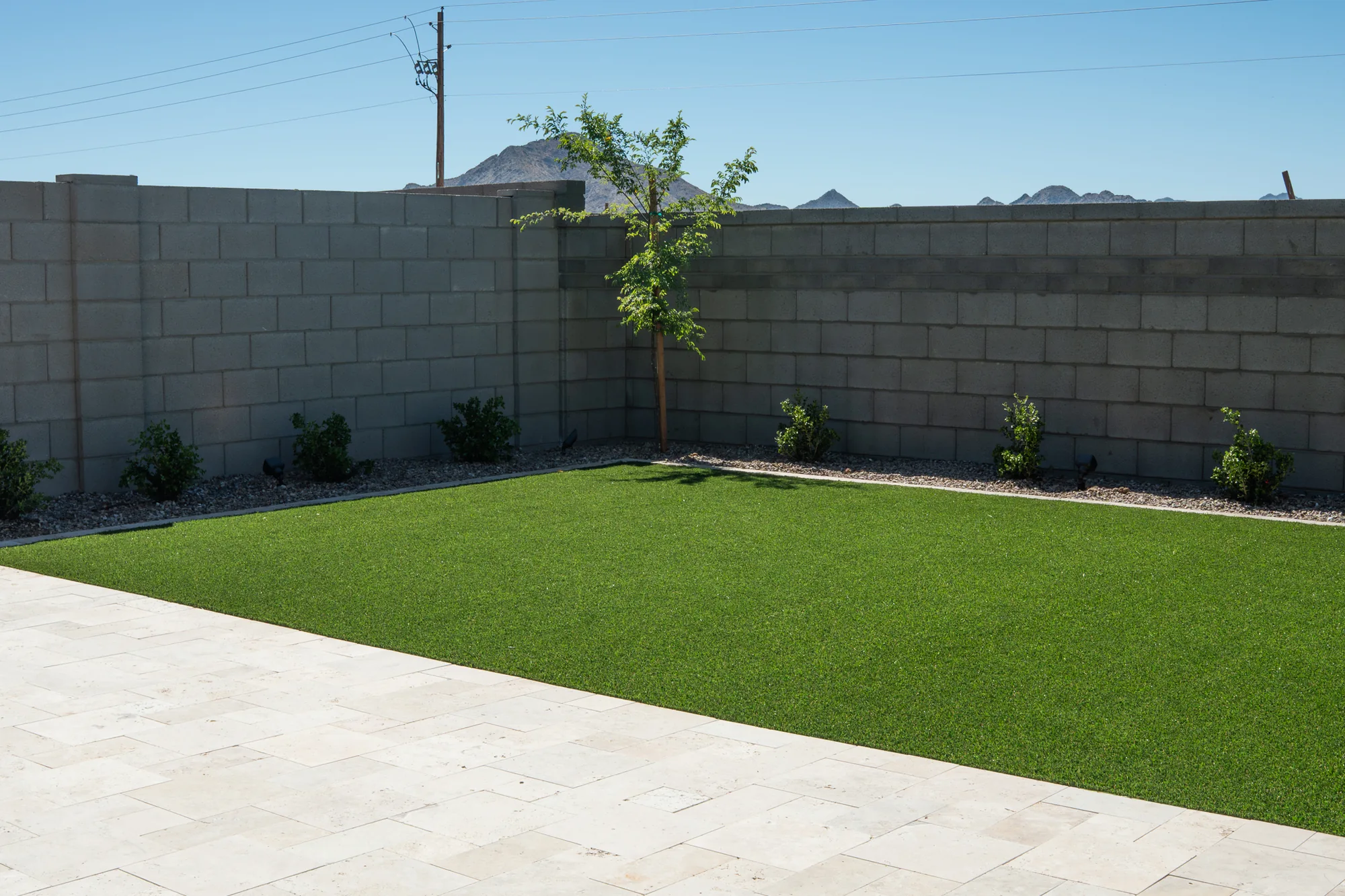
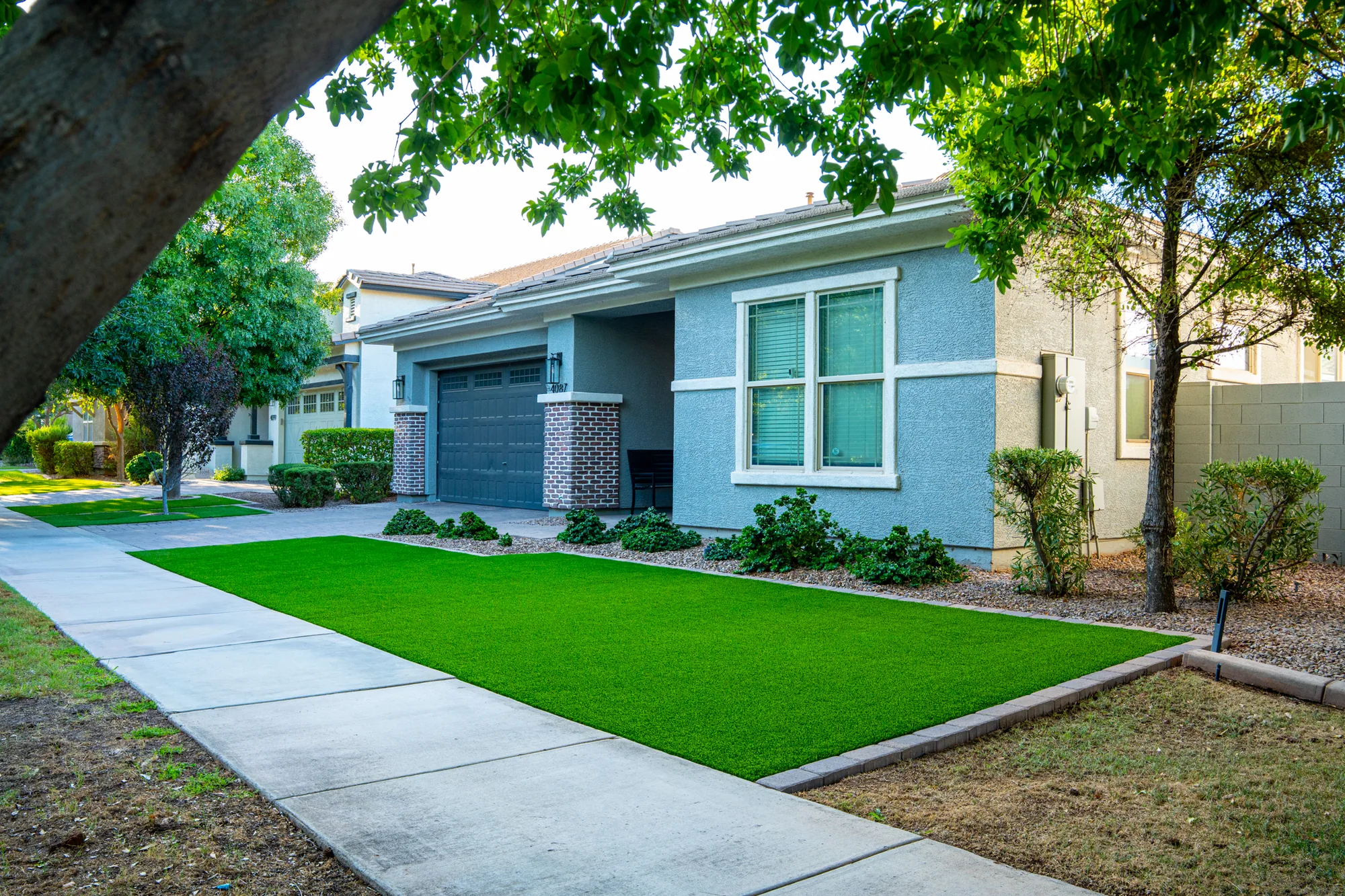
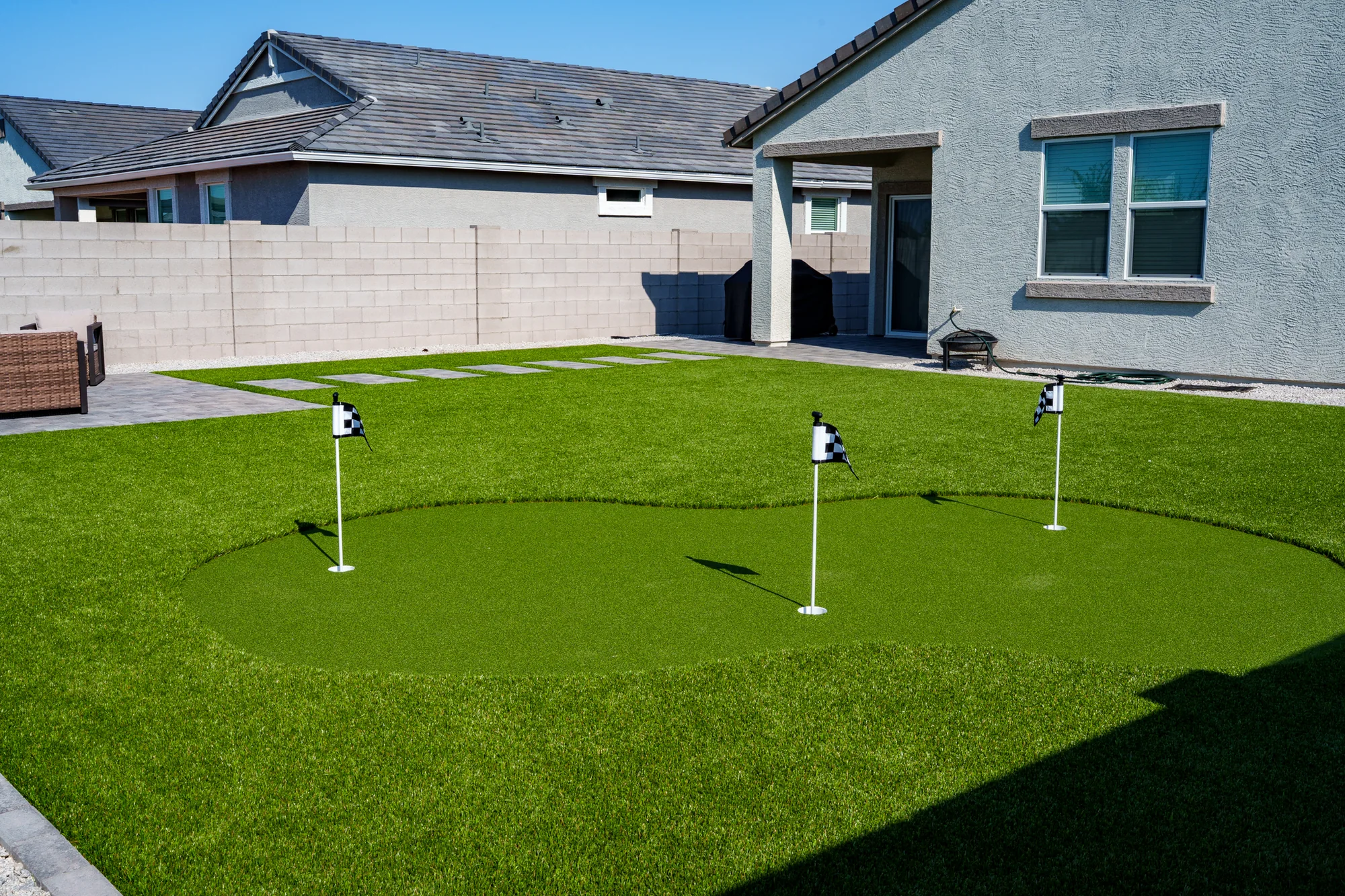
Turf gives you a green yard with no lawn to water, no mowing and no mud. It belongs where people and pets use the yard in the shade or in the evening. In open midday sun it is the hottest choice, so that is not where it should go.
Putting the three together
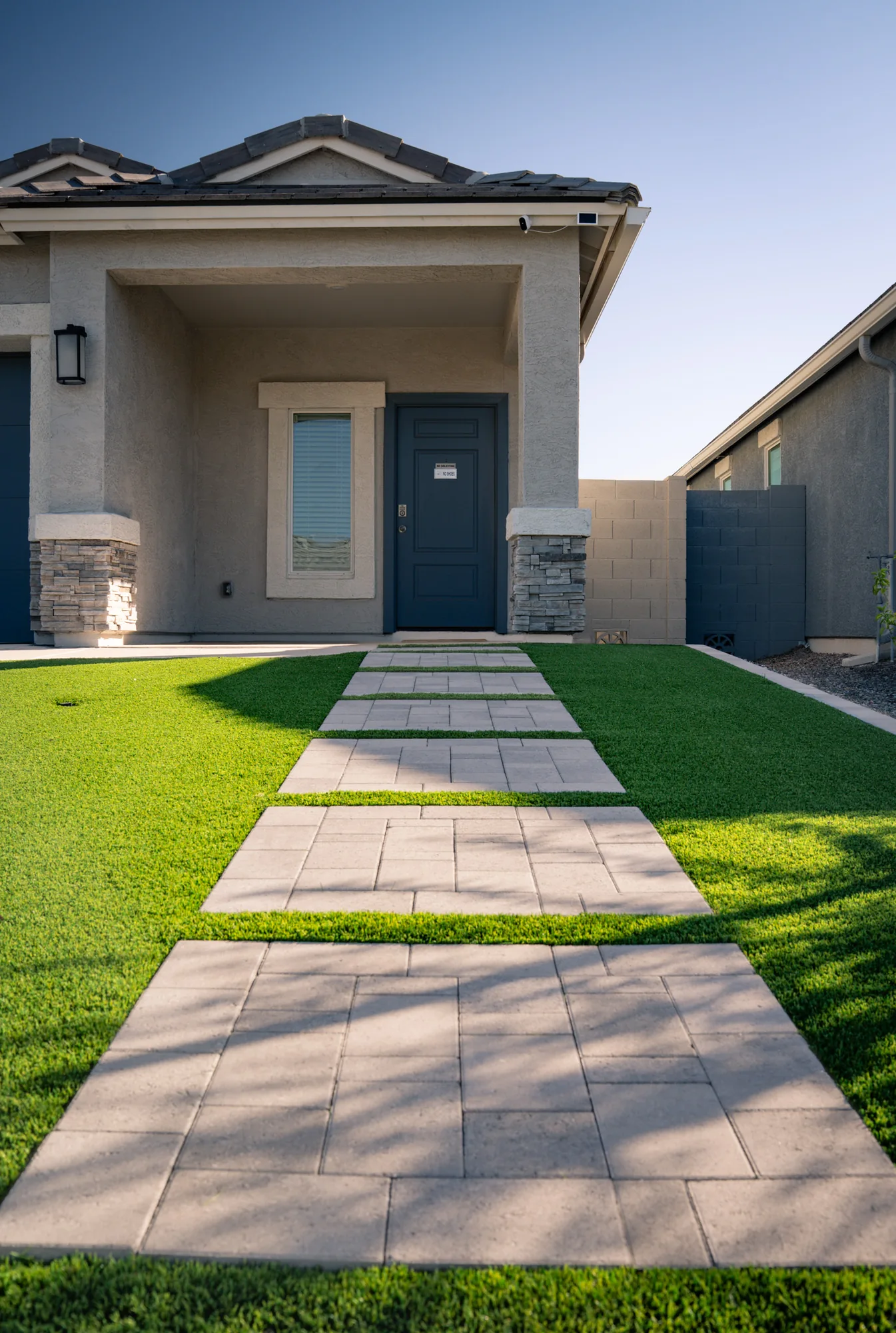
The yards that work best in the Valley use all of them on purpose. Turf goes under the shade and near the house, and stone takes the open sun and the walking routes.
If you want a living patch, keep it small. Put it where it gets afternoon shade so it uses less water.
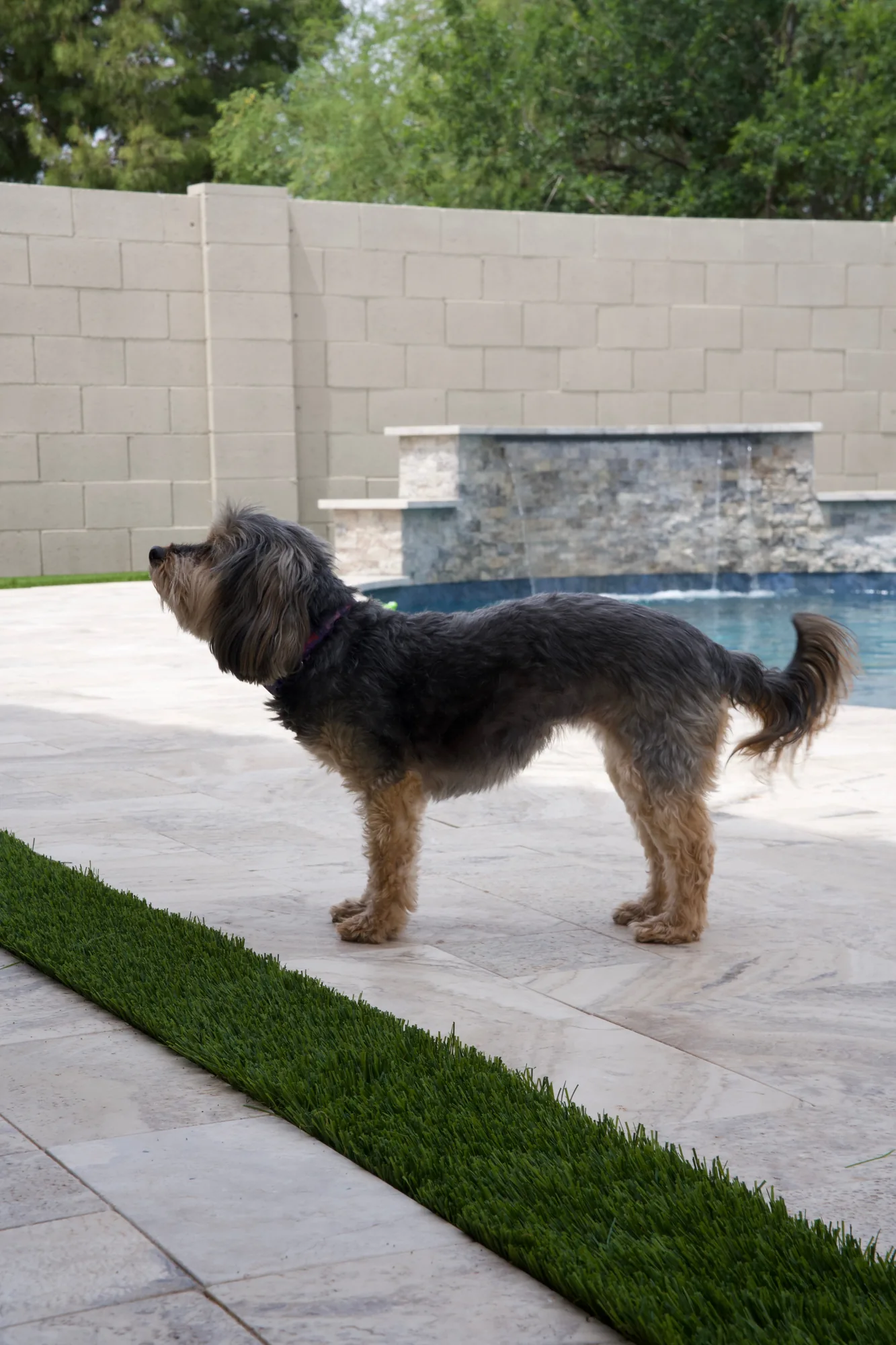
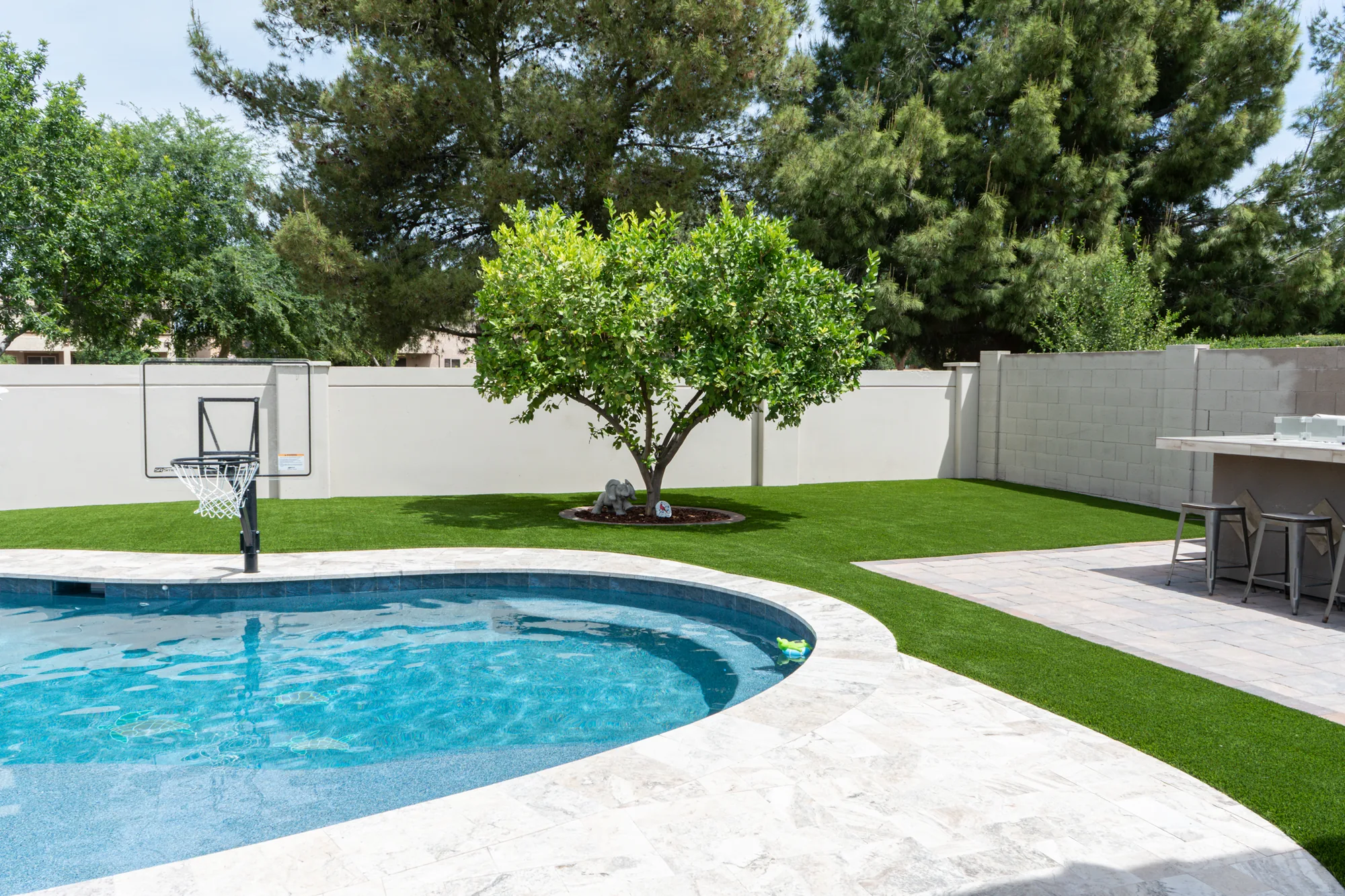
Around a pool, that means a stone path from the door to the steps. Turf goes in the shady corners where the kids sit. Our pool and patio turf page shows how we lay that out.
Splash from the pool also keeps nearby turf damp. That helps a little, for as long as it stays wet.
One test you can do yourself
Around 3pm on a sunny day, when both surfaces have had hours of sun, hold the back of your hand on your concrete patio for a few seconds. Then try the same thing on a neighbor's turf in full sun. You will feel the difference, and it won't be the one the ads promise.
For every number on turf heat and the ways to bring it down, read how hot artificial turf gets in a Phoenix summer. To see where the shade falls in your yard, read shade is the one thing that really cools turf.