The simplest rule for a Phoenix back yard is this: turf where the shade falls, stone where it doesn't. Follow it and the yard stays usable on a 112 degree afternoon. Ignore it and you end up with a green lawn nobody walks on from June to September.
Here is how we lay out a Valley yard so it works in July, step by step.
Step one: map the sun before anything else
Turf in full summer sun can top 150 degrees, hotter than the concrete beside it. In the BYU tests, shaded turf stayed far cooler. So where the shade falls decides almost everything else.
Watch the yard at 4pm
Go out at four in the afternoon on a sunny day and look at where the shadows land. Note the house shadow, the wall shadows and the patch under each tree. That is the part of the yard you will use most in summer.
Take a photo of it, or send us one. A single picture at 4pm tells us more about your yard than a page of measurements.
Note how you use the yard
Where does the dog go out? Where do the kids play? Where do you want chairs in the evening, and where does the grill live?
Think about the hours too. In July, a yard mostly gets used early in the morning and after the sun drops, while the middle of the day belongs to the air conditioning.
Write those uses down next to the shade map. The goal is to get every one of those uses into shade, or onto a surface that can take the sun.
Step two: match each spot to the right surface
Once you know where the shade is and how you use the space, the surfaces almost pick themselves.
Shaded use areas get turf
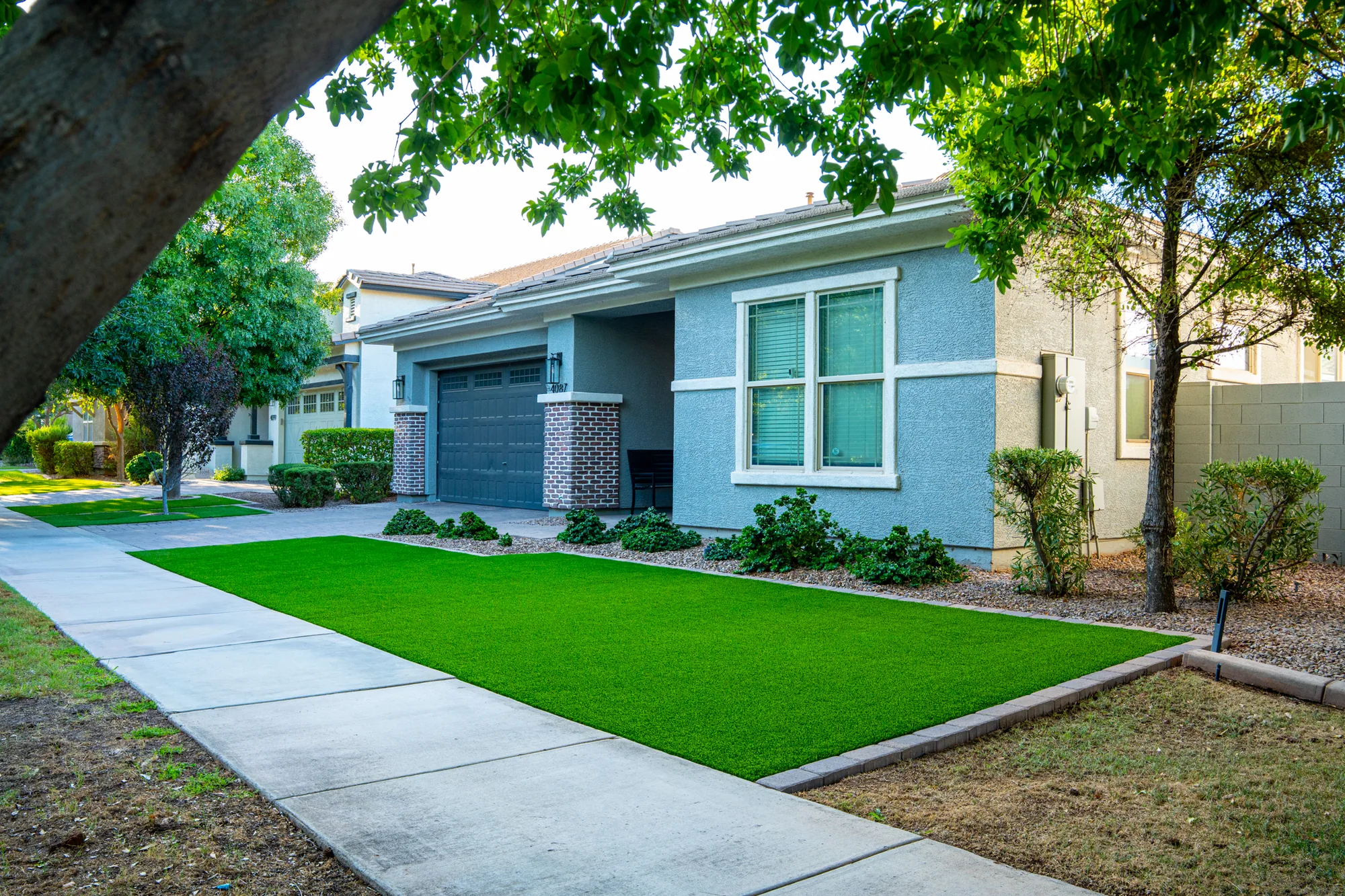
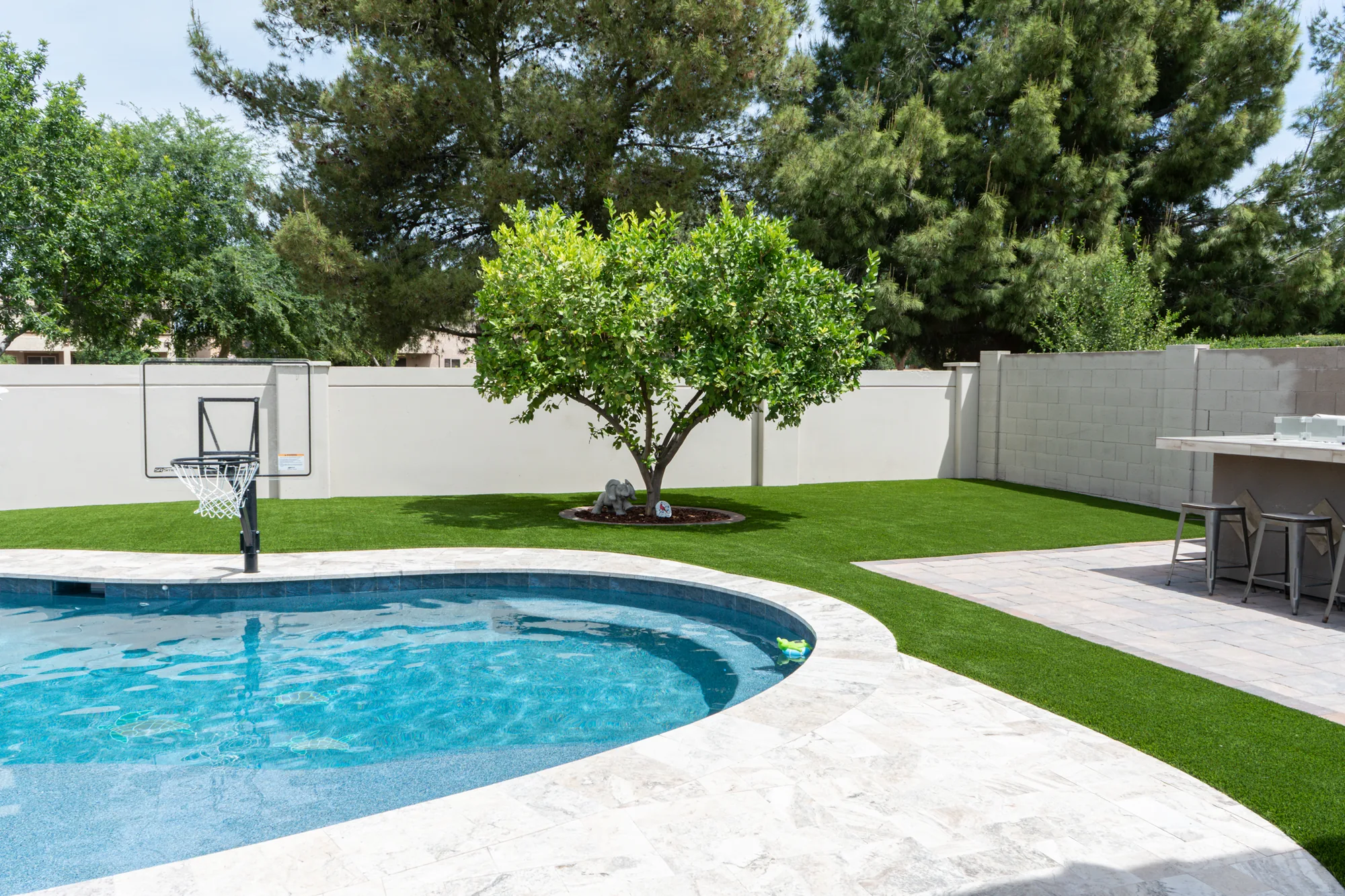
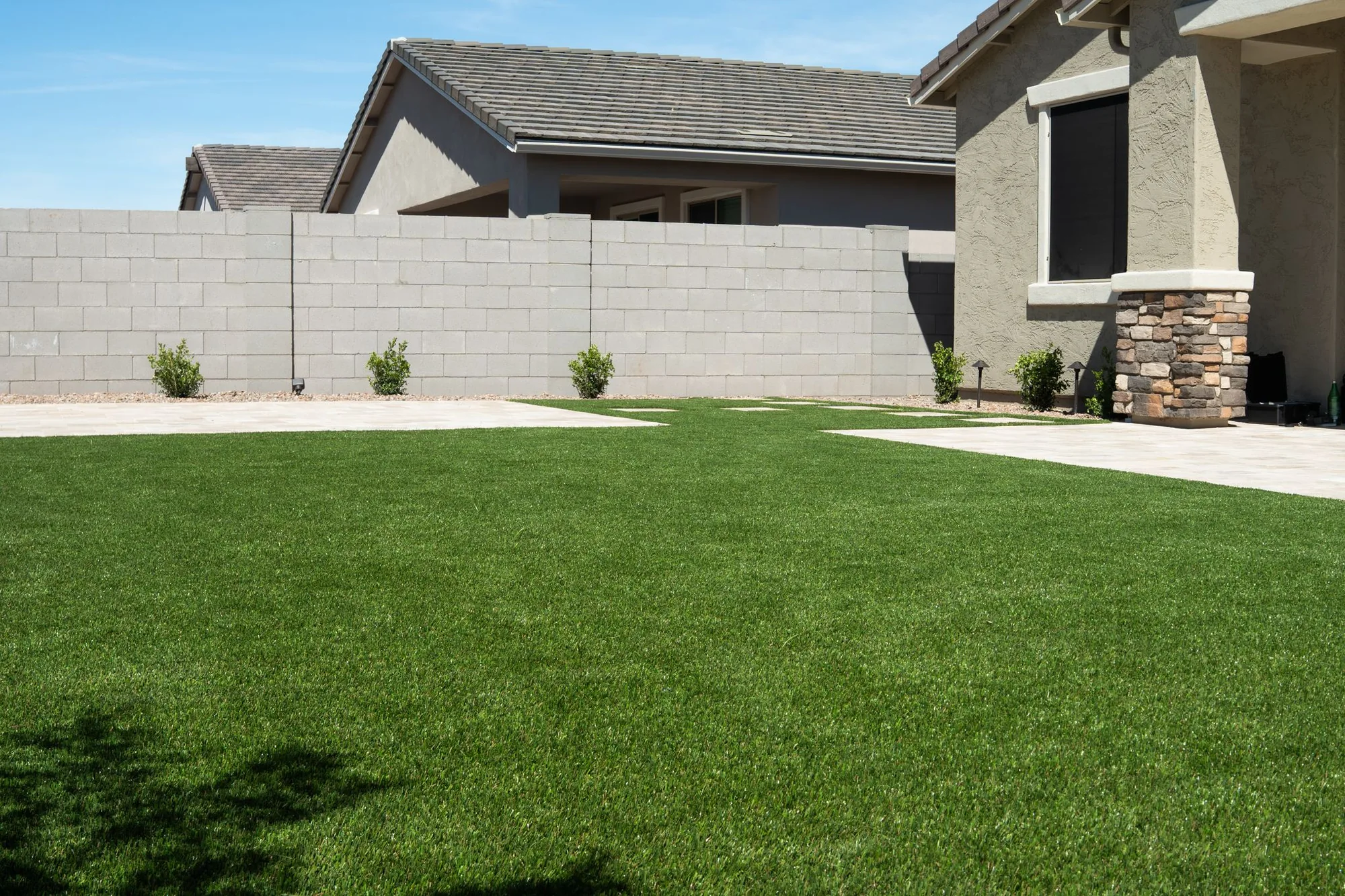
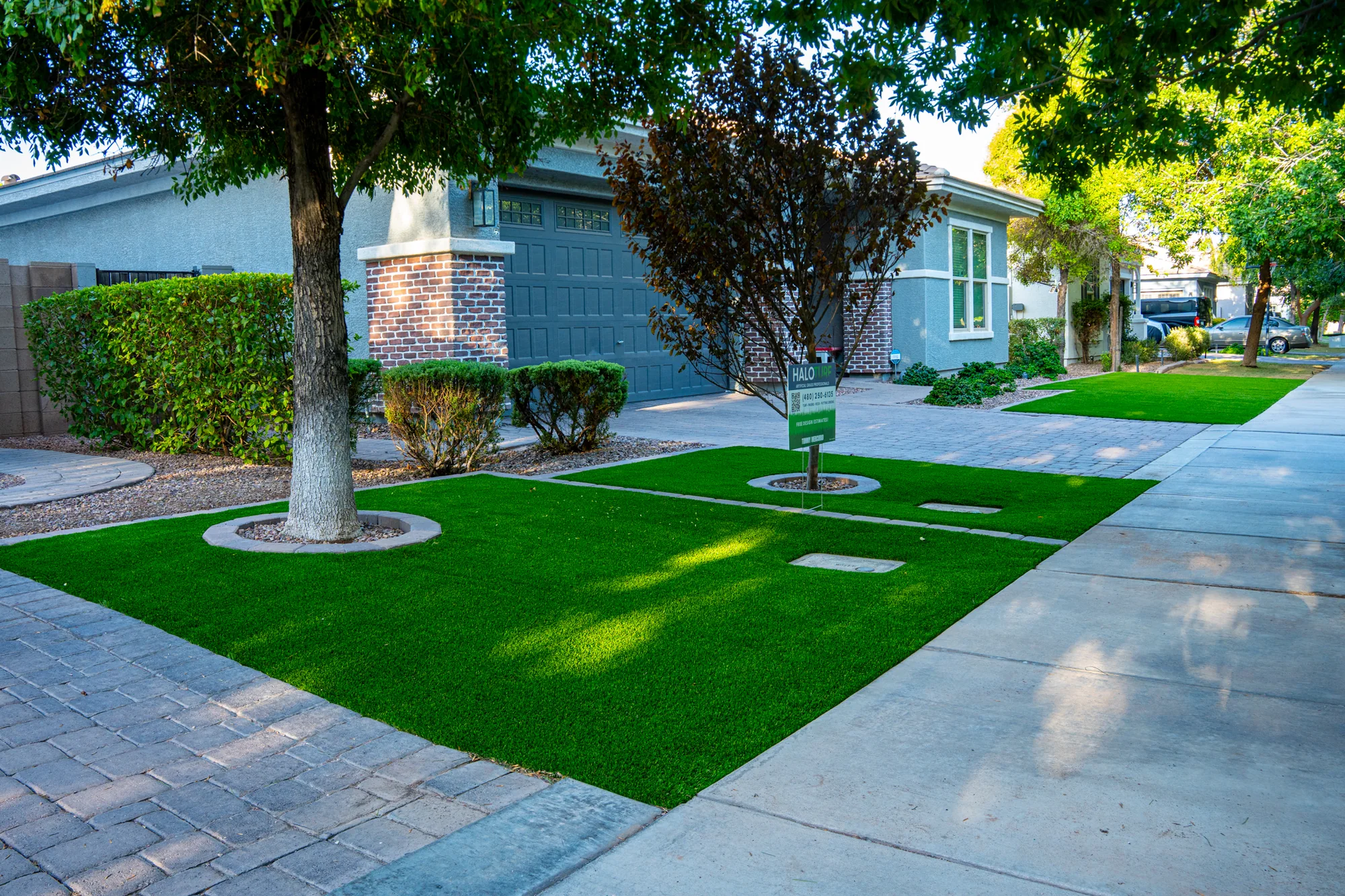
Turf earns its keep in three spots: the strip beside the house, the ground under a patio cover and the circle under a good tree. Kids can play there in the evening and the dog gets a soft spot out of the sun. The yard stays green and the lawn line comes off your water bill.
Open sun gets stone or gravel
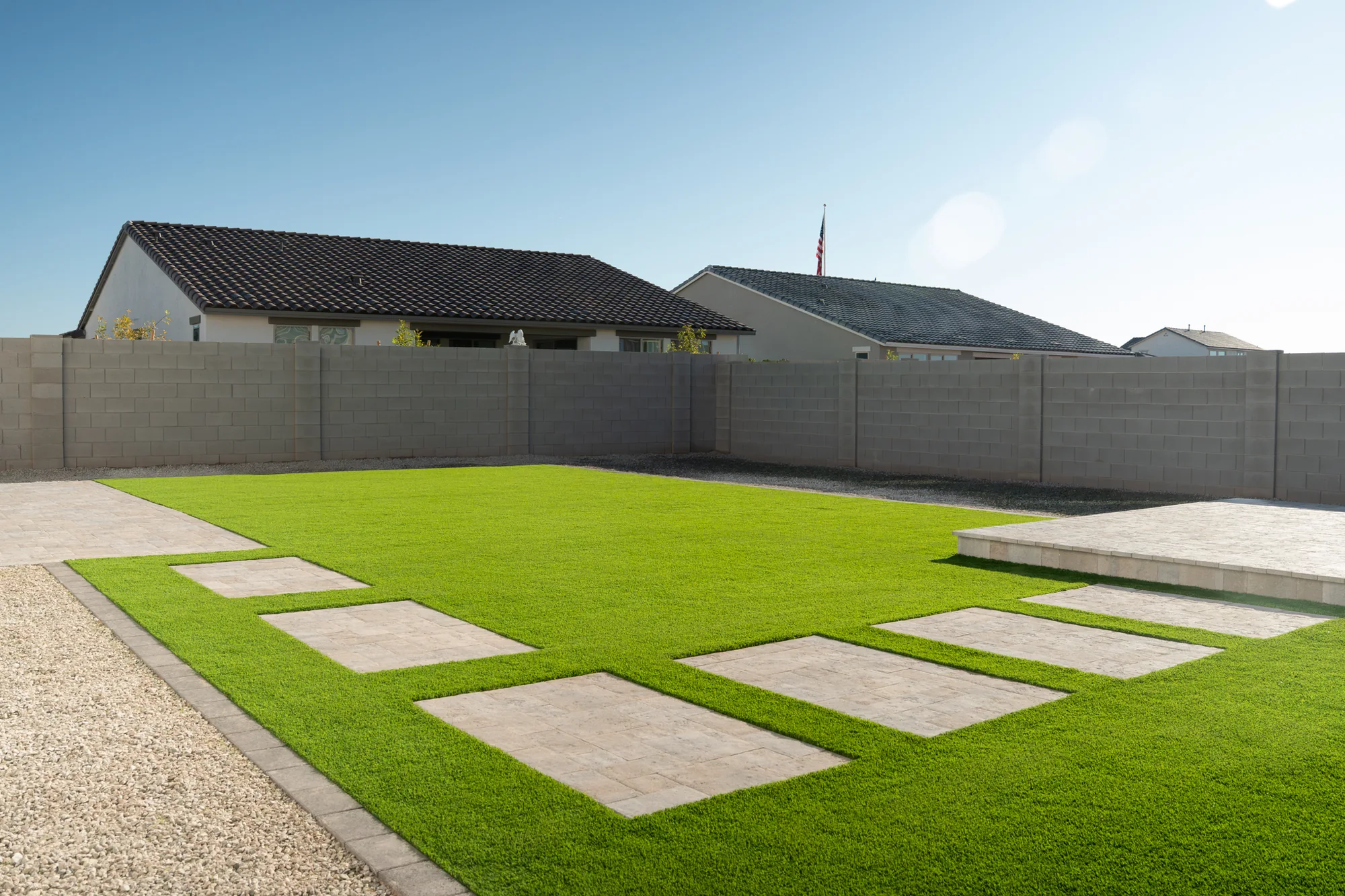
Ground that bakes from noon to sunset doesn't need to be lawn. Pavers, travertine or decorative gravel can take it. They still get hot, but concrete averaged 94°F against 117°F for turf in the BYU tests, and a path doesn't need to be soft.
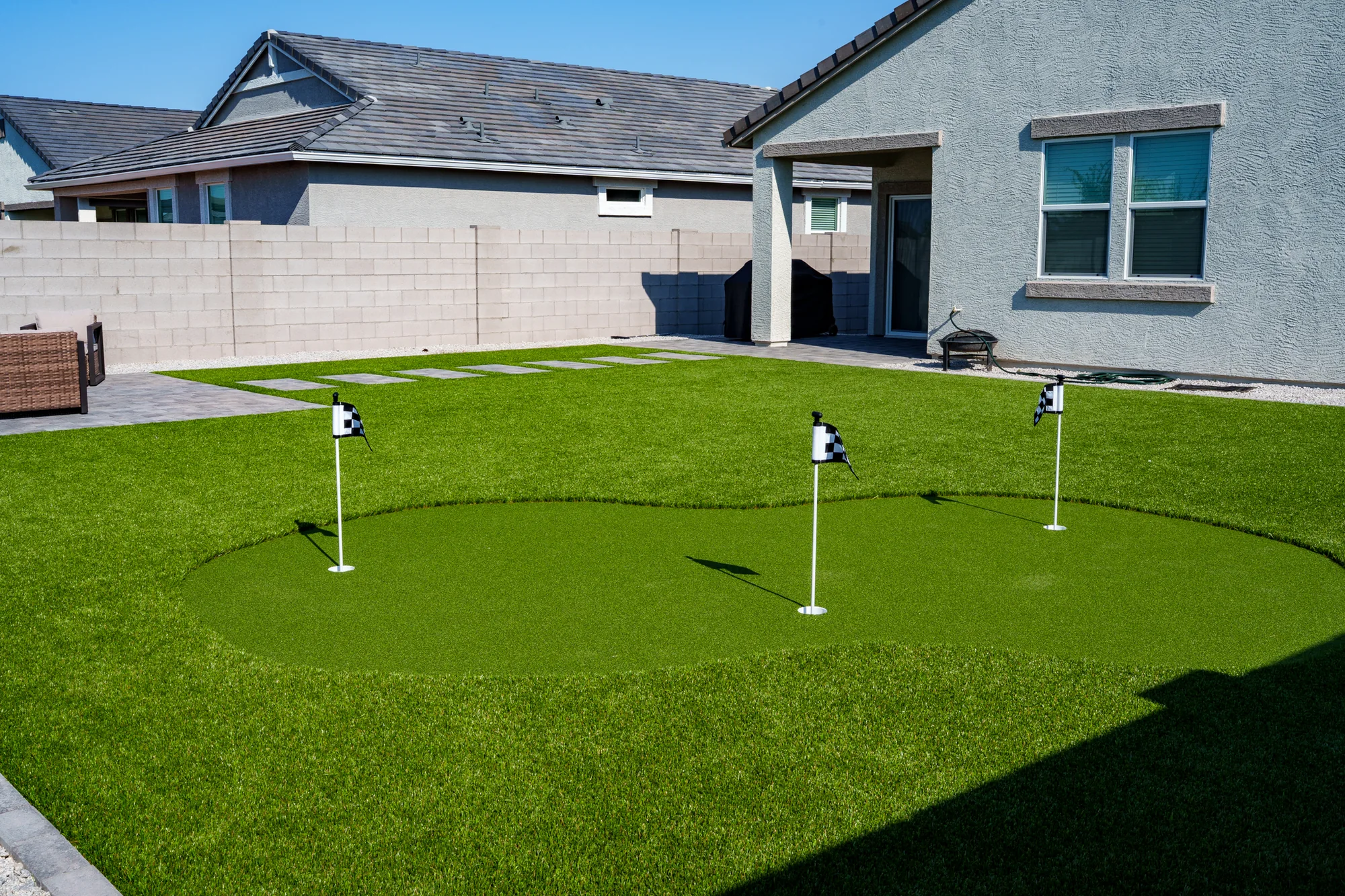
We lay pavers and travertine as well as turf, so the stone and the lawn can be planned as one job. That means the border lines up and the drainage works across both.
Walking routes stay on hardscape
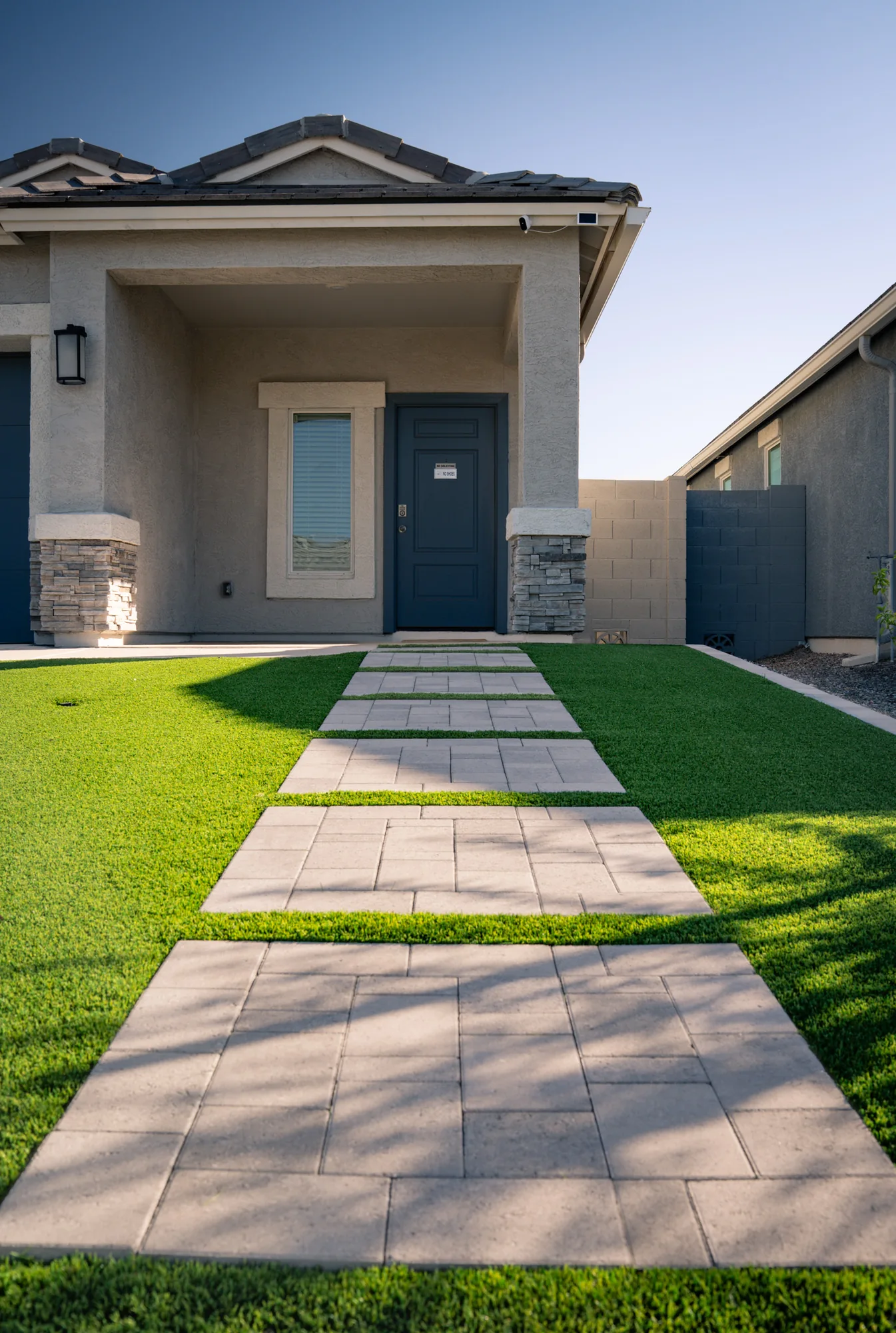
The path from the back door to the pool, the grill, the side gate and the trash cans should never cross open turf. Bare feet take the shortest route, so make the shortest route stone.
The dog gets a shaded landing zone
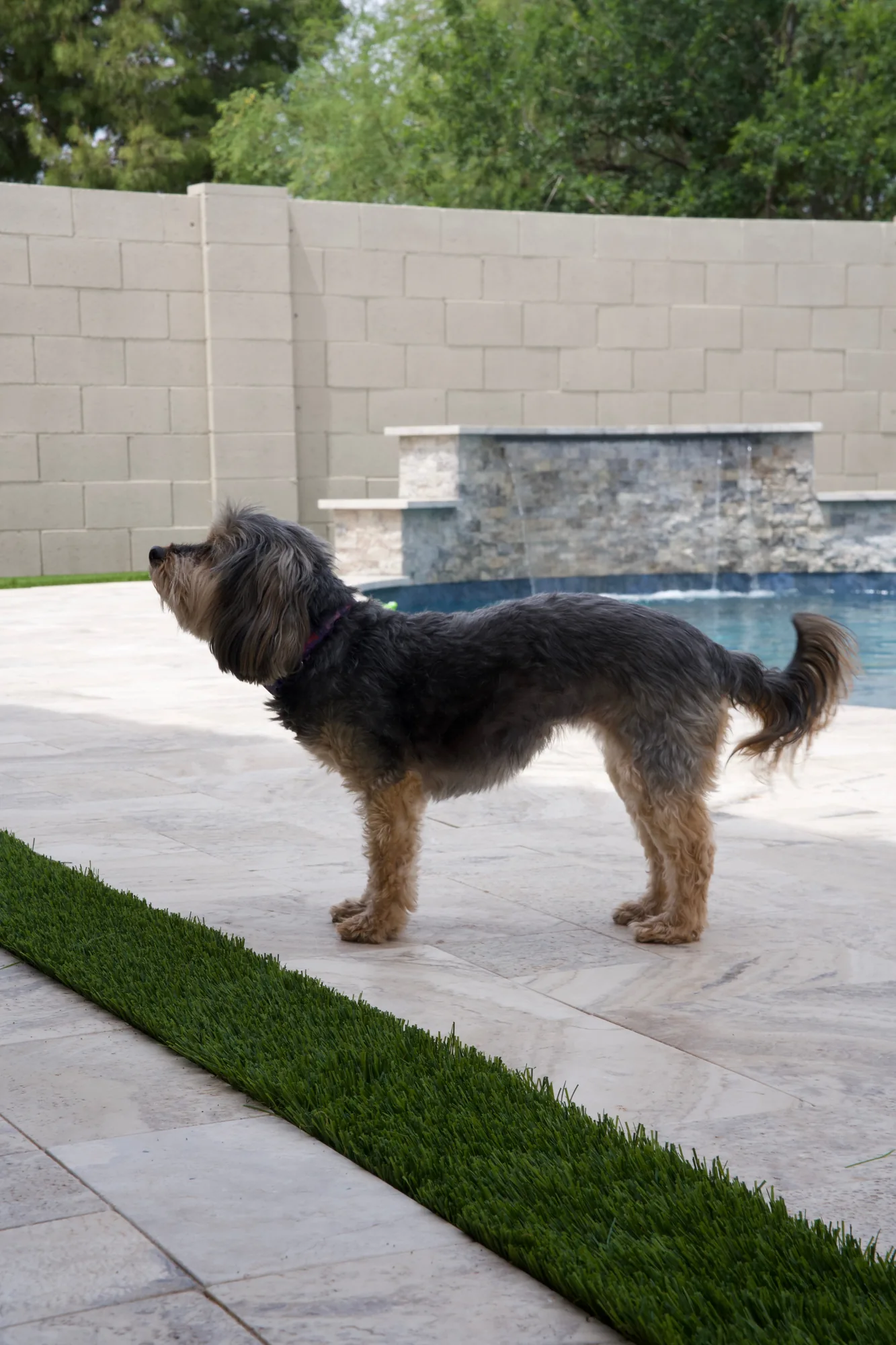
Put a patch of turf near the door that sits in shade by mid afternoon. On hot days, rinse it right before the dog goes out.
A rinse only buys a few minutes, so the shade has to do the real work. See rinsing turf cools it for minutes, not hours.
Step three: add shade where you need more
If the map shows your use areas in full sun, add shade before you add turf. We explain why in shade is the one thing that really cools turf. A patio cover, a pergola, a shade sail or a well placed tree can each turn open ground into a usable lawn.
Trees take water, so choose one or two that are worth it and run them on drip. A row of thirsty trees can give back the water you saved by pulling out grass. More than half of a typical Phoenix home's water already goes outdoors, and the point of turf is to bring that down.
What a finished yard looks like
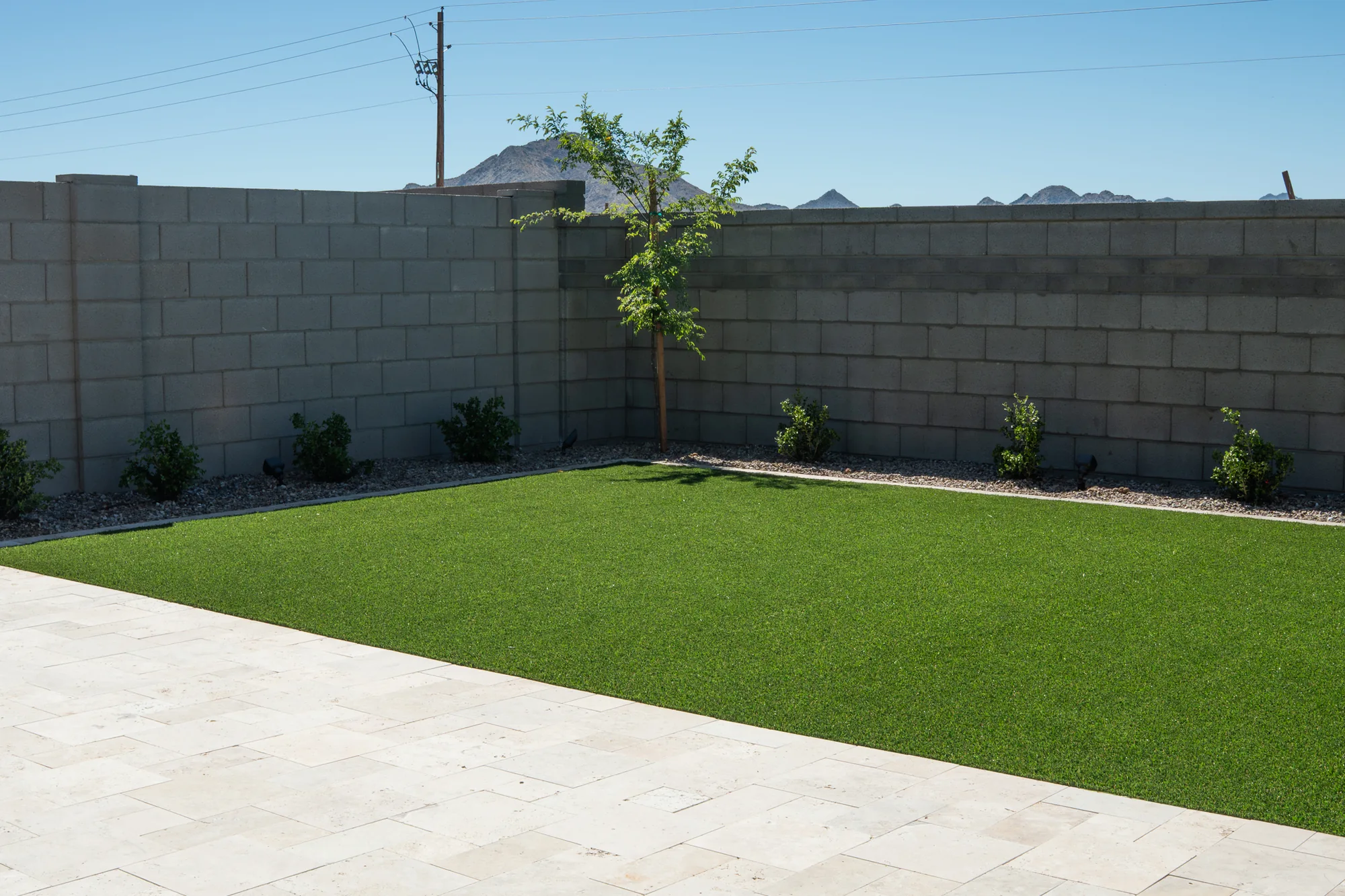
Picture a common Valley lot with the back yard on the east side of the house. Turf runs along the shaded side of the house and under the patio cover, and a paver path goes from the back door to the pool and the gate.
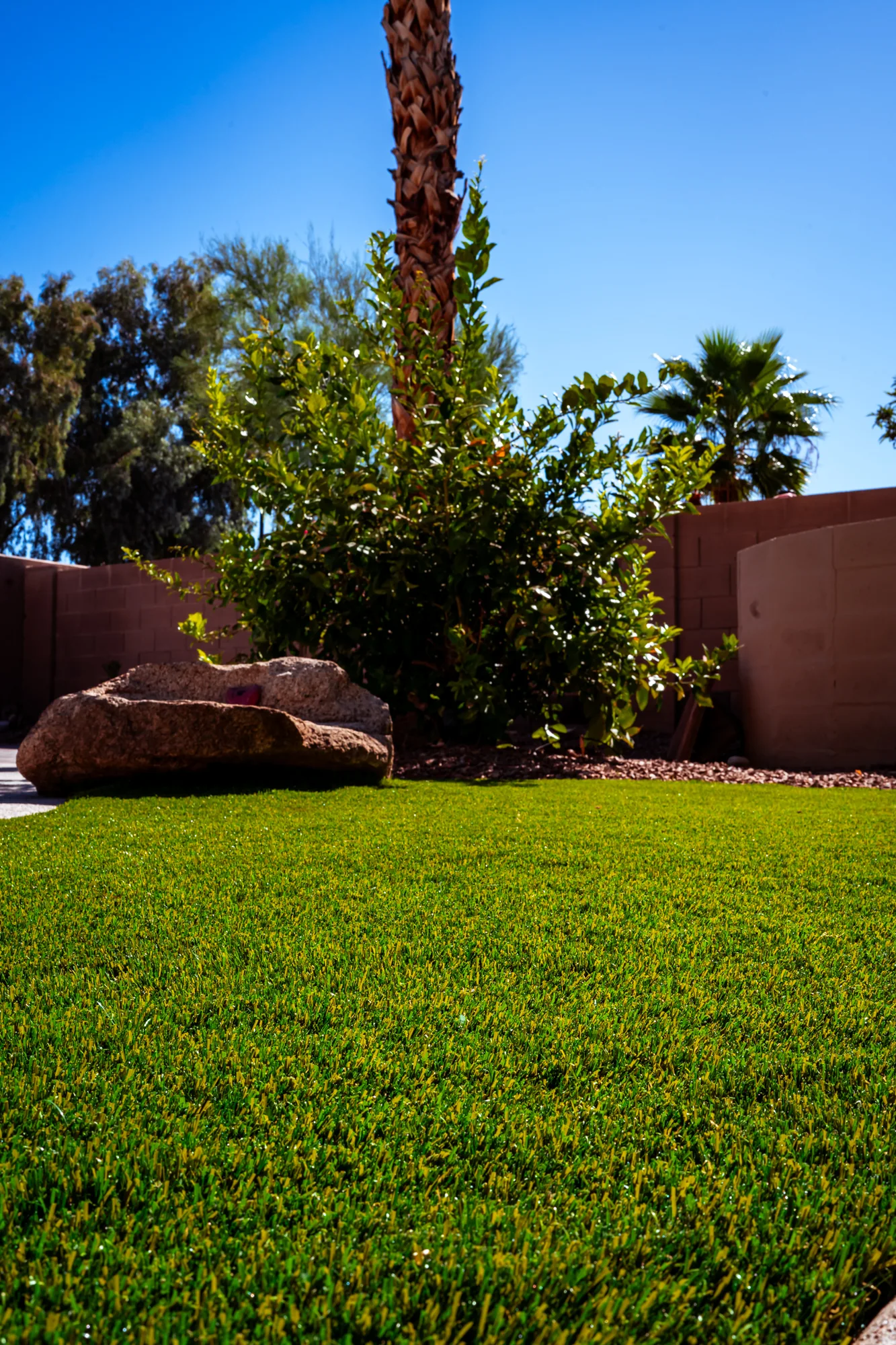
Gravel and a few desert plants take the sunny back corner. A small turf patch by the door belongs to the dog.
Nobody has to cross hot turf to get anywhere. The lawn gets used at 7am and again at 7pm, and the stone handles the hours in between.
The numbers behind this plan are in how hot artificial turf gets in a Phoenix summer. See how we build a residential turf lawn, or send us a photo of your yard at 4pm and we will sketch where the turf should go.